What if Matt Barkley didn’t return for his senior year?

Remember back in 2012, when there was a possibility that we could see one of the best quarterback drafts in NFL history. Andrew Luck and Robert Griffin III were the top prospects with Ryan Tannehill viewed as a nice consolation prize. However, there was a large contingency that believed there was another quarterback worthy of a top ten pick who ended up staying school. Matt Barkley, who some argued would have competed with Luck for the top pick, returned to USC for his senior year. He showed some major relapses and he ended up being a fourth round pick in 2013. But what if the former Trojan decided to head to the NFL a year early? Nothing is for sure but you can imagine a lot would change.

Barkley was highly regarded but I think it is likely that during the pre-draft workouts, Luck and Griffin would put some distance between themselves and the kid from USC. However, I think Barkley would still rate higher than fellow first rounder Ryan Tannehill. On draft day, Luck and Griffin still go one and two. None of the teams from picks three to seven really needed a quarterback. Miami sitting at number eight was ready to move on from Chad Henne and with Barkley still on the board, the Dolphins would gladly draft him. Barkley would join a Fins team with another former USC star in Reggie Bush led by rookie coach Joe Philbin. If Barkley began playing anything like he did during his senior season or how he has in the NFL with Philadelphia, there is a really good chance that veteran signal caller Matt Moore beats out Barkley for the starting job.

So this also means that there is no way for the Dolphins to take Tannehill, who continues to fall down the draft board. He doesn’t fall too long because sitting at number twelve is a team in desperate need of a young quarterback. The Seattle Seahawks had Tavaris Jackson under center the year before and desperately needed an upgrade. Matt Flynn was brought in as a potential replacement but that wouldn’t stop Seattle from picking up the talented Tannehill. Tannehill was viewed as a bit of project and based on how much the team was paying Flynn, the rookie from Texas A&M would probably be given a year to sit on the bench.

The 2012 season looks extremely different as well. Seattle struggles under Flynn and by the end of the season, Tannehill gets some reps as the starter, but the Seahawks miss the playoffs. Green Bay win against Seattle in week 4 with no Fail Mary game. This means that Green Bay finishes the season with the second best record in the NFC. Instead of Seattle and Minnesota in the playoffs, Chicago and Philadelphia make the postseason in their place. The Bears get a major showdown with the third seeded 49ers. The Eagles travel to Washington for a duel of rookie quarterbacks. Robert Griffin III versus Russell Wilson. Oh right, did I forget to mention that the Eagles snag Wilson in the third round because Seattle took Tannehill? Philadelphia falls next week to Atlanta who meets Green Bay in NFC championship game. Green Bay dispatches Atlanta for a matchup with the Ravens in the Super Bowl where Aaron Rodgers outduels Joe Flacco for his second straight Lombardi Trophy.

Andy Reid still leaves in 2013 and Chip Kelly cannot wait to get his hands on an offense led by Russell Wilson. Seattle is still good but not great with Tannehill under center. They miss the playoffs for a second consecutive year. That means no Legion of Boom and no Super Bowl rout of the Broncos. With the Seahawks out of the picture, the 49ers win the NFC West and the Nick Foles led Cardinals make it as a wildcard. Foles was drafted by the Cardinals when Philadelphia no longer had interest in him in the fourth round in 2012. The Eagles get a boost with Wilson under center to the second seed while the 49ers take the top seed. Green Bay beats New Orleans in the wildcard round while Philadelphia takes down Arizona. The Niners beat the Packers in the divisional round setting up a meeting with Russell Wilson again in the NFC championship game, this time with the Eagles. Philly’s offense of DeSean Jackson, LeSean McCoy and Jeremy Maclin is the Greatest Show on Turf 2.0 and Philadelphia finds itself in the Super Bowl against Peyton Manning’s Broncos. With no incredible defense to haunt him, Manning plays great and narrowly beats Philly in a shootout giving Manning his second ring.

Now some of you might be saying, what about Matt Barkley and the Dolphins? Don’t worry. I’m getting to that. Barkley never develops quite how Miami wants. So in 2014, they are in the market for a new quarterback. Joe Philbin decides to go after a different Texas A&M quarterback with their first round pick by the name of Johnny Manziel. For once, the Cleveland Browns don’t completely lose out because they get Carson Palmer when Arizona no longer wants to sign him with Foles under center, so the Browns don’t want Manziel anyway.

So in short, Russell Wilson is an Eagle, Nick Foles is a Cardinal, Carson Palmer is a Brown, Rodgers has two rings, Manning has two rings and Wilson ends up with none. The Legion of Boom never happens in Seattle and Miami ends up with Manziel. All of this just because Matt Barkley decides to leave school one year sooner.
Major League Baseball has laid out the blueprint

So now the question is, when does everyone else start catching up? Major League Baseball suspended four different pitchers in the past 2-plus weeks for use of a steroid called stanozolol. Popular among body builders, the drug reportedly helps athletes lose fat while maintaining lean body mass. Ervin Santana, David Rollins, Arodys Vizcaino and Jenrry Mejia all tested positive for the steroid under the new MLB anti-doping policy. The league also announced they will be investigating the repeated appearance of the drug, using the 2013 Biogenesis investigation as a model. Clearly, MLB has made major strides in its handling of steroid usage and cases showing an initiative to clean up the league.

Despite the obvious success MLB has seen since the implementation of the new system, other professional sporting leagues have yet to follow. The NFL has some basic steroid testing in place but not to the full extent possible. The NBA and NHL have relatively weak systems that do not pose much of a threat to players who are using these drugs. Each of them have clearly outlined systems but none of them are being enforced anywhere close to as heavily. Let’s go through some basic comparisons.

Roger_Goodell

NFL
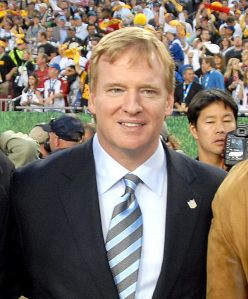
The NFL is probably next in line behind MLB but they are still fairly far behind. Players are subjected to random drug testing during the season. If a player were to test positive for steroids, HGH or stimulants, they would immediately receive a 4-game suspension. On a second offense, players are suspended for ten games and a third offense results in a minimum two-year ban from the league and all related activity. Players have to apply for reinstatement as well following the minimum two years. If a player tests positive for stimulants during the offseason, they are referred to the league substance abuse program. The NFL also does a relatively good job of enforcing the drug policy, with roughly 100 players suspended since 2010. The HGH testing is new for the league though, which shows they are still conscious that the policy can be tweaked and improved.

Adam_Silver

NBA
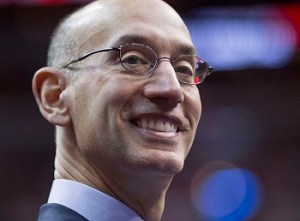
The NBA seems to have a solid program in place. NBA players are subjected to a reasonable number of tests per season with four random tests during the course of the league year. Players can even be tested on reasonable cause, determined by a third-party expert. However, the penalties are pretty minor with a first offense resulting in only a ten game suspension. A second offense means the player only earns a 25-game ban and a third offense results in a yearlong ban. A fourth offense would result in a permanent ban from the league. That is all well and good, except when you look at the numbers. The NBA has suspended exactly three players since 2010 for violating the NBA drug policy. That includes drugs of abuse and other illegal substances outside of steroids. Those numbers are not too high when you compare them to anywhere else.

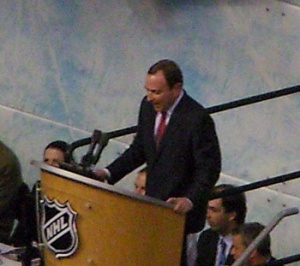
Gary_Bettman

NHL
Hockey, like basketball, has never really gripped the nation with a major drug scandal. The NHL does a fairly good job of testing as many players as possible. Each player is subjected to two unannounced drug tests per season and one of them must be a team-wide test. The number of tests is on the smaller side unfortunately but the punishment is better than the NBA and probably on par with the NFL. A first-time offender receives a 20 game suspension, a second offense results in a 60-game suspension and a third offense is a permanent suspension. Like the NFL, players can apply for reinstatement after the minimum two years are served. The league does not crack down too much on players. They have only suspended three players under the new performance enhancing drug policy, but it was only launched last year.

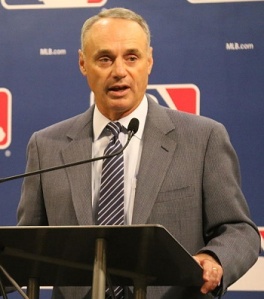
Rob_Manfred

MLB
It is rare that I think baseball is truly way ahead of the curve when it comes to the major sports in the United States, but for steroid testing, it isn’t even close. Every year at the start of spring training, each player is subjected to a urine and blood test. The league then randomly chooses 3,200 urine and 260 blood tests of random players throughout the course of the season to catch those who begin doping following the spring training tests. The league also selects certain urine tests to undergo carbon isotope ratio mass spectrometry analysis. MLB, like the NBA allows reasonable cause testing, something the NFL and NHL have not yet implemented as far as I could find in the bylaws. MLB is also much harsher with its punishments. The league hands out an 80-game suspension following a first offense and a season-long suspension after a second offense. A third offense will result in a permanent ban with a minimum of two years required before a player can request reinstatement. MLB has suspended 19 players since May of 2012 and that doesn’t include 5 minor leaguers as well.

Overall, there is still clearly cheating in American sports due to performance enhancing drugs. Baseball has taken the right initiative with the intensive measures used in its testing. The key thing that MLB has that other sports desperately lack is the public shame that comes with steroid use. Dozens of players have been held out of the Hall of Fame due to their checkered past with steroids. It creates a major stigma for the player and MLB is continuing to enforce the image that steroids make you a cheater. The NFL does not do that, often refraining from using the word steroids, opting instead to refer to them as performance enhancing drugs. The idea is still the same, but the stigma that comes with being called a steroid user is just not there. The NBA’s and NHL’s rate of suspending players is a joke.

And none of this seems to be a problem for them. According to an article from ESPN, NBA general counsel, Rick Buchanan, was quoted saying, “We think we have a program that is as good as any other in pro sports.” That is the underlying issue. No one is putting enough pressure on these other leagues to make a change. Fans agonized over MLB’s faulty system until they made some major improvements, and now the league has easily the best anti-doping program of any American sport. We might all like to think that these leagues will strive for change on their own, but without a little push from their fans, there is no chance that the NBA, NFL or NHL make the necessary moves to truly fight steroid use in American sports.

Salvaging the Wolves

The Minnesota Timberwolves are bad. That’s it. Plain and simple. This team is currently tied with the hapless Knicks for the worst record in the NBA with just two games to go in the season. Obviously, the Timberwolves do not have much left to play for this season. That doesn’t mean that these games don’t mean something for the players. In a lot of ways, this is a tryout to see who might be on the team next year. It also could help the Minnesota front office figure out what to do with some of the veterans on the team. Guys like Ricky Rubio, Nikola Peckovic and Kevin Martin have all had good runs with the team but none of them have really lived up to the money they are paid. With some of the guys they have rising through the ranks, it might be time for the Wolves to start looking elsewhere.

Kevin_Martin

Kevin Martin, Shooting Guard
Age: 32
Decision: Sell
Kevin Martin has shown the ability to light up the scoreboard and be a great offensive piece for Minnesota. However, with his age and overall ineffectiveness shooting the basketball, his value significantly drops for this rebuilding team. Martin has shot only 42.3 percent from the field this season. He also provides little when it comes to assists and rebounds on a night-to-night basis. The other major concern for Martin is his health. He only has appeared in 38 games this year, marking the fifth time in his career that Martin has been unable to play in more than 51 games. He simply is not a player Minnesota can consistently rely on. He should be moved, maybe in a deal with the next player on this list.

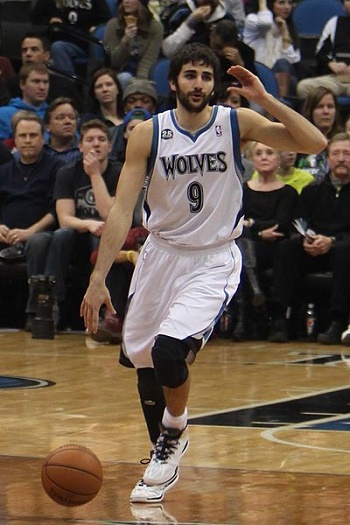
Ricky_Rubio

Ricky Rubio, Point Guard
Age: 24
Decision: Sell
Despite being one of the most promising point guards when he entered the league four years ago, Ricky Rubio has never really been able to convert the potential into talent. Entering his fourth year in the NBA, Rubio showed signs of being ready to take a big step. Instead, he was injured once again and has spent another injury-riddled season mostly on the bench. The Timberwolves are running out of time to wait on him to develop as well. In his only season where he played a full slate of games, Rubio failed to average more than ten points per game and shot a mediocre 38 percent from the field. And then here’s a scary stat, that was a career-high for Rubio when it comes to shooting percentage. Meanwhile, rookie point guard Zach LaVine has caught fire recently. The athletic freak has averaged 19 points, 5 assists and 5 rebounds on 44.5 percent shooting over the past 10 games. It looks like Minnesota might already have Rubio’s replacement in house.

Nikola_Pekovic

Nikola Pekovic, Center
Age: 29
Decision: Sell
While he might be one of their best offensive assets but with one of the top picks in this year’s draft, the Timberwolves can replace Nikola Pekovic. Through five years in the NBA, Pekovic has never played more than 65 games in one season. He shot a career worst 42.4 percent from the field and his season ended very early due to an Achilles injury. The Wolves also owe Pekovic roughly $12 million each of the next three seasons. That’s a lot to be paying for a player who is not on the court very often. He also saw his scoring drop to the lowest since his rookie year and his rebounding totals dip to the lowest since 2011. Overall, Pek is not really improving at this point in his career. With either Jahlil Okafor or Karl-Anthony Towns likely set to wear a Timberwolves jersey next season, Pekovic could be expendable.

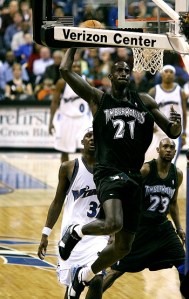
Kevin Garnett

Kevin Garnett, Power Forward
Age: 38
Decision: Keep
Even though he is going to be 39 years old next season, Kevin Garnett provides some value for this young Timberwolves team. He doesn’t do a ton on the court anymore when it comes to converting on the court but when he does play, Garnett has been fairly effective. He is more suited as a sixth man or role player next year but after shooting 58 percent from the floor and providing almost eight points per game in limited minutes since returning to Minnesota, he has made a difference. Plus, his veteran leadership and championship experience are invaluable. Garnett can bring a bit of fire to this team and improve them from a mental aspect. He might not be worth the $12 million price tag he has at the moment, but bringing him back would be a smart move.

The Timberwolves are going to look like a very different team next year pretty much no matter what. Gary Neal and Garnett are set to be free agents and if Chase Budinger opts out this club would have some holes to fix. With what is shaping up to be a fairly strong draft class, trading away some of the veterans for a couple of middle of the order draft picks could be a great way for Minnesota to restart and rebuild.

Are these freshmen making the jump too early?

The NBA draft is still a couple of months off but the buzz surrounding the biggest basketball event of the summer has already begun. With the NCAA deadline to declare for the draft just four days away, the draft class has all but taken form. The seniors obviously had no choice but there were several underclassmen who decided to make the jump early despite having plenty of eligibility and potential championships left at their universities. For some, leaving school for the NBA will seem like a no-brainer. For others, the decision was maybe a little rushed. Out of the dozens of underclassmen to declare, there are a couple that stick out that should have stayed in school.

Tyus Jones, Freshman
Point Guard, Duke
He has yet to actually declare and I sincerely hope he does not. Jones is a very talented player and based on his performance in Duke’s national championship run, his value is probably as high as it will ever be. However, he is not truly pro-ready. The comparisons I have frequently heard have been to former Syracuse guard Tyler Ennis. Not that their style of play is all that similar but they face (faced) similar situations. Ennis had a stellar freshman year for the Orange and the talent around him was at a high point. He was not pro-ready either but because his value was so high, and Syracuse’s outlook for the following season was not as strong, Ennis declared and has since bounced around the NBA D-league. Jones is in the same position. Duke will almost definitely drop next year as Jahlil Okafor and Justise Winslow will both be playing in the NBA.

He also struggled a bit to find his shot at times this year, finishing with a 41.7 percent conversion rate. Jones never really managed to find a way to truly blend scoring and assisting. The stretch of games Jones played in the tournament underlines his streaky play. Jones only registered ten plus points and five plus assists in two games. And one of those was against #16 seed Robert Morris. Jones exploded in the finals for 23 points but was limited to only one dime. He also shot below 40 percent in four of those six games. Simply stated, Jones is a project with a lot of upside. He benefitted from the talent around him and will need some time before he turns into a viable NBA prospect.

Chris McCullough, Freshman
Power Forward, Syracuse
McCullough was a one-and-done candidate entering the season, but that changed quickly when he tore his ACL back in December. Now, with McCullough not set to be cleared until December of next season, he will not be of much use to teams in the short term. He will need to finish rehabbing and likely would need some time to learn the new system for whatever team he lands with. McCullough is likely trying to bolt from the uncertain situation in Syracuse right now with NCAA sanctions leveled against the basketball program and Jim Boeheim set for suspension from ACC games. Other news points to McCullough making the leap based on having a child due in May.

Either way, McCullough is far from a finished product. He showed plenty of promise as a rebounder and shot blocker. He racked up about seven boards per game and over two blocks per contest. He even tallied 1.7 steals a night as well. On offense though, McCullough definitely needs some work. He only shot 48 percent from the field, on the lower end for a big man. He almost relapsed when it came to scoring as well. After notching at least ten points per game through his first eight matchups, McCullough went cold and failed to hit ten again for his next eight appearances. With his offensive and injury concerns, McCullough will definitely be sliding into the second round. Had he returned, he would have had the chance to significantly boost his draft stock in another year for the Orange.

Karl-Anthony Towns, Freshman
Power Forward, Kentucky
Towns was one of the best players in college basketball this season. Don’t get me wrong, I think he will be an excellent player at the professional level. I just think that another year in the collegiate ranks would be very beneficial to Towns. He played on one of the most talented teams potentially ever assembled in college basketball history, which limited his ability to showcase and develop his talents. He occasionally flashed the ability to take over games, but failed to do it regularly.

There are also a couple of concerns that I have about Towns that I have voiced before. First, he didn’t play very many minutes, (Towns registered over 30 minutes once) which makes me wonder how quickly he will adjust to the professional level. Then there is the issue of his inconsistency on offense. He shoots the ball at a high percentage, but in eight different games this year, Towns failed to score even five points. That includes the Sweet 16 game against West Virginia when he went 0-3 from the field and only registered a single point. I think that another year under Coach Calipari in Kentucky would really serve Towns well. He could become the complete package and make a real splash at the focus of what will be almost definitely another talented Wildcat squad.

Are you kidding me Mayock?

Seriously? After all this time now he makes a change. Based on what? For those who are unaware, NFL Network draft expert Mike Mayock made a major switch today in his big board rankings. He moved former Oregon quarterback Marcus Mariota ahead of his Florida State counterpart Jameis Winston. This may seem like no big deal on the surface because both players are still being evaluated but there seems to be no reason for the change. Mayock cited that the new rankings are being released with pro days being wrapped up but that doesn’t provide any answers either. Winston had a stellar pro day workout with only 11 incompletions on over 100 throws. Mariota on the other hand, threw only 7 incompletions but on only 65 throws. The numbers aren’t even what was concerning. The wide consensus following the workouts was that he had nailed it and Mariota was “underwhelming.”

With all of that said, I have no idea why Mariota would get the bump up to the number one positional spot for quarterbacks according to Mayock. He might just be one guy but he is a bit of a draft guru as NFL Network’s answer to Mel Kiper Jr. and Todd McShay. What he says usually holds some weight. Now this makes me wonder if Mayock knows something the rest of us don’t. Has he been talking to teams who feel that Winston hasn’t won them over? Whatever the case may be, it raises some concerns, even if they are minor, about Winston.

Another report appeared today, which should also shake some confidence in the Winston camp. Tampa Bay hosted Mariota for a private workout earlier and Buccaneers offensive coordinator Dick Koetter called the workout “outstanding.” They raved about his footwork, athleticism and speed. The workout also came from the Bucs, not from Mariota. All of these signs definitely point to a boost in Mariota’s draft stock. After being considered the lock as the top pick for so long, Winston’s move down comes as almost a shock for fans.

However, I think this might be part of the learning experience from last year. Louisville quarterback Teddy Bridgewater had a very tough pro day last year and that led to him dropping all the way from the first projected overall pick down to being actually selected thirty-second overall. Bridgewater went on to be arguably the best rookie quarterback in the NFL last season. That mistake on many team’s part probably underlines why teams have not made as big a deal this year about Mariota’s lackluster pro day. It doesn’t mean a ton but these trends should be noted at the very least when it comes to projected who might be selected where.

To be honest, my assessment of the two is that Winston is more pro ready with a lower ceiling, while Mariota is a little rawer with a much higher ceiling. In the short term, Winston will be a much better pick. He will make a big difference for a team next season but he won’t improve a ton over his time in the league. He will likely become a steady, above average starter if he can work out some of his accuracy issues and ball security. Meanwhile, Mariota has the potential to be a game changer once he fully develops. He will take at least one season to get comfortable in a true pro system but he has enough talent that he could become an elite quarterback if he gets the right coaching and stays healthy. His concerns will be more just grasping the offense gameplan.

If I had to pick though, I think I would go with Mariota. He projects better in the long term and he definitely has shown more maturity off the field. He has demonstrated his ability to buy into a system and he definitely a player that I would feel comfortable leading my team for the next 15 years.