NBA Free Agency Winners and Losers

kawhi_leonard_vs_charlotte_2019
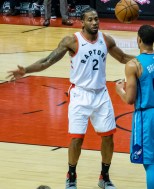
Leonard turned the NBA on its head by signing with the Clippers. (Wikimedia Commons)

Chaos. Absolute chaos. That is the best way to sum up NBA free agency in 2019. Kawhi Leonard and Paul George are teaming up with the Clippers. Kevin Durant and Kyrie Irving joined forces in Brooklyn. Anthony Davis finally landed in Los Angeles alongside LeBron James and DeMarcus Cousins. That doesn’t even include Al Horford, Jimmy Butler or Kemba Walker signing with new teams.

It was one of the craziest weeks in the history of the league. At the end of the day, the league’s power dynamic has completely shifted. The NBA officially runs through Los Angeles. It is time to assess the winner and losers from this wild free agency period.

los_angeles_clippers_logo_1984-2010Winners: Los Angeles Clippers
Wow. No one saw this coming. The Clippers were long linked to Kawhi, but no one expected him to go there alongside George. The former Thunder superstar forced his way out of OKC and now creates a superstar pairing with a ton of depth around them. Los Angeles has to be the title favorite heading into the season.
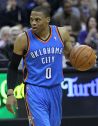
Russell WestbrookLoser: Russell Westbrook
This cannot be where Russ expected to be when free agency opened. The talks are already rumbling about a potential Westbrook trade so Oklahoma City can truly enter a rebuild. He finds himself without a co-star on a team that still couldn’t make it out of the first round of the playoffs. His days in OKC are numbered.
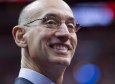
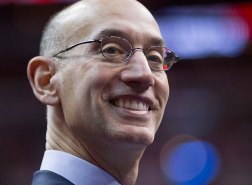
800px-adam_silver_281584700477129Winner: The NBA
Do you remember there ever being a more exciting free agency period in another sport? MLB is coming off a year where huge names moved, but it took so long that the fun was lost. The NBA is in a league of its own when it comes to exciting offseason drama. It is clearly dominating the headlines and will be the talk of the sports world well into the month of July, not a typical situation for basketball.

toronto_raptors-wordmarkLosers: Toronto Raptors
Leonard is gone. Danny Green is gone. That’s 40 percent of the Raptors’ championship-winning starting lineup set to play next year in Los Angeles. Toronto is far from a rebuild, still boasting Kyle Lowry, Marc Gasol, Serge Ibaka and Pascal Siakam. The bench is deep, but this team no longer has a top-five star to lean on. The Raptors will be good, but they are no longer anywhere near the title conversation.

Nets logoWinners: Brooklyn Nets
It is easy to almost forget about the Nets given the moves the Clippers just made, but Brooklyn set itself up to be a contender from 2020 onward. Kevin Durant, Kyrie Irving and DeAndre Jordan join a team full of young talent and perimeter shooting. The Nets even made the playoffs last season without their new big three. Without Durant, they don’t have the makeup of a real contender, but when he returns, they will be firmly in the conversation.

9163126439_ba341593de_bLoser: New York Knicks
It’s hard to talk about one basketball team in New York without bringing up the other. The narrative all season was that the Knicks were poised to land a bunch of stars in the offseason. Kyrie Irving, Kevin Durant and Anthony Davis were all mentioned. Instead, New York’s big free agency move was to land Julius Randle. That is barely a consolation prize by comparison to what could have been. Given the fact the Knicks also missed out on the Zion sweepstakes, fans are going to be very unhappy with how this offseason went.
1280px-los_angeles_lakers_logo.svg_Winners: Los Angeles Lakers
No, they didn’t win the Kawhi sweepstakes, but it might be a good thing for the Lakers for this year. With limited cap space, the Lakers filled out the rest of their roster, bringing back Rajon Rondo and Kentavious Caldwell-Pope. Then they landed the floor-stretching Danny Green and continuing reclamation project DeMarcus Cousins. Cousins showed flashes of his All-Star potential in the postseason, before he suffered another injury. There is a decent amount of injury risk with this team, but if it can stay healthy, Los Angeles is much closer to an NBA title than it was a year ago.

charlotte_hornets-wordmarkLosers: Charlotte Hornets
This continues to be one of the worst run franchises in the NBA. Kemba Walker skipped town and the Hornets overpaid to bring in Terry Rozier. He might be 25 years old, but paying him over $19 million a year seems pretty steep. This team is capped out otherwise and seems to be nowhere near the playoff conversation. Charlotte will finally have more flexibility next season, but losing Walker makes it tough to qualify this as anything other than a loss.

philadelphia76ers2Winners: Philadelphia 76ers
Lost in the shuffle of all this is the fact the Sixers reloaded for another run. Signing Tobias Harris, sending Jimmy Butler to Miami for Josh Richardson and signing Al Horford makes Philly one of the best defensive teams in the NBA. It will be interesting to see how this team lines up, Ben Simmons could play point guard, but it seems like this is the best positioned team to challenge Milwaukee in the East next year.

cleveland_cavaliers_wordmarkLosers: Cleveland Cavaliers
The Cavs are undoubtedly in a rebuild and seemed poised to move high-priced veterans like Kevin Love and JR Smith. With free agency mostly over and every roster seemingly set, it is going to be more difficult to move either or both players. Cleveland had a window to reshape the roster and it feels like it missed out.

miami_heat_wordmarkWinners: Miami Heat
For whatever reason, Pat Riley never wants to go through a rebuild. Miami reloaded again by adding Jimmy Butler in a sign-and-trade deal with Philly. Suddenly, the Heat are in the mix to continue to build. Don’t expect the Riley to sit around idly either. He will be aggressive in acquiring more pieces to surround Butler and Dion Waiters.

minnesota_timberwolves_wordmarkLosers: Minnesota Timberwolves
There were a lot of rumors this was a likely destination for DeAngelo Russell. Not only did Minnesota not land him, they failed to move Andrew Wiggins’ bloated contract as well. Signing Jordan Bell was a savvy, but Minnesota went through another offseason without finding a way to build around Karl-Anthony Towns. In a loaded Western Conference, this team feels further away from the playoffs than they did a year ago.

memphis_grizzlies_wordmarkWinners: Memphis Grizzlies
Make no mistake, Memphis is nowhere near competing with the top tier teams in the West, but they are leaning into the rebuild. The Grizzlies sent Mike Conley to Utah and acquired Andre Igoudala and a first round pick from the Warriors as part of a salary dump. They will continue to be active, already adding Delon Wright to the list of veterans shipped out.


Basketball needs a new villain

The curtain has come down on what proved to be an NBA season chock full of storylines. Kawhi Leonard delivered Toronto its first title, LeBron James missed the playoffs for the first time in over a decade, and Golden State missed out on the first 3-peat since a guy named Jordan did it in the 90s. Yet, as the dust settles, one key role has been left shockingly unfilled in the world of basketball. For the first time in quite a while, basketball does not have a villain.

Kobe Bryant
The Black Mamba won 5 titles spanning the course of 11 years. (Flikr)

This role, most recently portrayed by Kevin Durant, is one common to basketball for decades. Sometimes, it even manifested into teams. The “Bad Boys” were the clear villain in the NBA during the late 80s, led by Bill Laimbeer. The mantle was passed to Christian Laetner in the early 90s. The late 90s were owned by that Kobe kid. He likely held that title for quite a while, even giving his persona a name which struck fear into the heart of his opponents. Although JJ Reddick really challenged him for the crown during the mid 2000’s.

In 2010, LeBron James announced he would be taking up the role until further notice when he created the first modern era super team. When he stepped down, as his character arc brought him back to hero status, Grayson Allen stepped up to bring back the Duke hate. That led us into Durant’s reign when he signed with Golden State.

391px-lebron_james_vs_washington_3-30-11
The King became the league’s best villain ever with his move to South Beach. (Wikimedia Commons)

There is no doubt though that Durant is done with the role, after attempting to play through injury in the finals before rupturing his Achillies, as the Warriors ultimately succumbed to injuries and the might of Kawhi Leonard. That kind of grit and determination won over a lot of the haters. Golden State already seemed to be losing steam as the league’s big bad. With Durant set to miss most or all of next season, Grayson Allen wasting away in Utah and LeBron looking like a business mogul in L.A., it is safe to say basketball will be holding auditions to replace him as its antagonist.

It is hard to know where to look for the next villain of basketball. The men’s college game didn’t produce any worthy candidates. It’s best player was one of the nicest people on the planet. The women’s college game didn’t even come close to manufacturing a leading lady, as Sabrina Ionescu (basically) felled every triple-double record ever known. The closest thing the WNBA might have is Brittney Griner, but she doesn’t seem to command the same level of animosity she did in college.

The NBA seems like the best bet to unearth the next great basketball antihero. With free agency looming and the Lakers acquisition of Anthony Davis, could Los Angeles once again become the home of the sport’s evil empire? This is Hollywood after all. They produce great villains all the time.

LeBron’s Lakers feel like the only remaining hope for a true villain right now in basketball. There is the potential college basketball will suddenly find a worthy contender, but no one seems ideally placed to take on the role. In the NBA, none of the current superstars feel all that hateable. Leonard is way too soft spoken. Giannis Antetokounmpo feels way too lovable. The closest thing the Association currently has to a new villain is Drake. In order for him to truly vault into that position, the Raptors would need to be a consistent contender. That is far from guaranteed. It also feels pretty lame if the villain is not even a player.

I just feel lost right now in terms of who to hate. After so many years of great villains, I can’t buy into hating the Lakers yet. I now feel bad for Durant and the Warriors. I dislike James Harden, but that hardly elevates him to villain status. Basketball just looks like a villain-less wasteland.

No, basketball must truly return to the drawing board and craft up a new character to lord over the sport, inspiring hate in all of our social media diatribes. The NBA capped its incredible storytelling with a masterstroke of having the unsuspecting Raptors vanquish the mighty Warriors, but it came at the cost of its best villain in years.

Celtics win the Anthony Davis lottery

Anthony Davis
Anthony Davis demanded a trade back in January. (Flikr)

Tuesday night’s chaos has led to some legitimate reshaping of the NBA landscape in a matter of minutes. The New Orleans Pelicans, who entered with the 7th-best odds to land the top pick, actually won the NBA Draft lottery. I would argue though, that based on how the rest of the lottery shook out, the Celtics actually won the night.

There is no question the Pelicans are in a much better place than they were prior to the those ping pong balls bouncing their way on Tuesday. The opportunity to (most likely) select Zion Williamson in June could be a franchise-altering moment. However, it sounds like their current superstar Anthony Davis still wants out of New Orleans.

It sounds like the Pelicans will still need to move the former Kentucky star this offseason, even if they hope to convince him otherwise. There have been some landing spots bandied about over the past few months, but with the Pelicans already in possession of the top pick, it changes a lot. And it all shook out in the Celtics’ favor.

For one, the Knicks don’t have the top pick, significantly hurting their ability to pry Davis from NOLA. RJ Barrett would be a nice piece to add, but if that is the piece that headlines the trade deal for Davis, there is a lot less to be excited about considering the Pelicans are already in line for the best prospect in the draft.

While the Lakers jumped into the top 4, there is reason to be skeptical a deal will get done between these two franchises. Los Angeles started this whole Davis sweepstakes and New Orleans accused LA of tampering as well. Part of me believes the Pelicans will remain spiteful and refuse to deal Davis to the Lakers. The package of Lonzo Ball, Josh Hart, Kyle Kuzma and the fourth pick, probably DeAndre Hunter or Jarrett Culver, is much more enticing than anything the Knicks could offer.

800px-jayson_tatum_284346746173029
Jayson Tatum is only 21 years old and average 15 points and six rebounds this year in Boston. (Wikimedia Commons)

With the Knicks in a much worse position and the Lakers still viewed as the enemy, that leaves the Celtics. Boston landed the 14th overall pick, which is what most expected, but that pick could have gone to the 76ers if the Kings had won the lottery (the NBA is complicated sometimes). So hanging onto the pick was good for Boston, either to add another young player or as ammo in a trade for Davis.

What Danny Ainge has that no one else does is a budding star to offer in return in the form of Jayson Tatum. Boston could send Tatum, Gordon Hayward, Marcus Smart and that 14th pick to New Orleans in return for Anthony Davis. They can offer a better package than anyone else in the NBA. Hayward is included to balance out the money being swapped, but that also means the Celtics could keep a max contract slot open this offseason to attract, say, Kevin Durant. Kyrie Irving, Kevin Durant and Anthony Davis would present Boston with its best big three since, well just 2010 actually, but you get the idea. The key would be locking up Davis to a long-term deal, but that is a core more than capable of winning a title in Beantown.

800px-zion_williamson_duke
A trade for Tatum could pair Zion Williamson with another former Duke star. (Wikimedia Commons)

The reason why I like the Celtics to land Davis is because of what the Pelicans feel they can build in return. A team boasting Jayson Tatum, Marcus Smart, Gordon Hayward, Zion Williamson and Jrue Holiday has a lot of potential to be great. It would give them a good mix of cost controlled deals and max contracts to build a true contender, something New Orleans seemed intent on doing with Davis after hiring former Cleveland general manager David Griffin as executive vice president of basketball operations.

It is a rare situation where both franchises get exactly what they are looking for. The Celtics add a superstar to keep Kyrie in town and make it the most popular free agent destination in the league, while still hanging onto young talent like Jaylen Brown and Terry Rozier. With two other first round picks, they can still add new rookie contracts or acquire another veteran via trade. The Pelicans go through an accelerated rebuild and create one of the most exciting young teams in the league pretty much overnight.

After months of feeling like AD was headed for Los Angeles or New York, the Pelicans are back in control and can listen to the best offer available. That will definitely come from Boston, who is desperate to win a title very soon.

It is all speculation at this point, but Tuesday night was a very good night for the Boston Celtics.

Fixing the NBA season

Alright, let’s be honest. The NBA regular season was more entertaining than I expected with the Bucks taking a huge next step and the Nuggets coming out of nowhere. I definitely stand corrected on my initial take that the season was not worth watching.

That being said, there are still some major issues with the NBA regular season. It doesn’t really mean much. Between the 82 games and excessive number of playoff teams with 7 game series in the postseason, it really diminishes the value of performing well in the regular season.

Last year offers a clear example of this issue. The Rockets and Raptors earned one seeds in each conference. The Cavs entered as the 4 seed and still made it to the finals. It took 7-game series for Golden State and Cleveland in the conference finals, but the two best teams still made it through to the finals (well the two best teams that could, the Rockets and Warriors were the best two teams in the league overall).

In short, the regular season is too long. 82 games is unnecessary to determine who the best teams are. 16 teams is too many for the playoffs and history shows how little success those bottom seeds have in the postseason. The reason for the limited success is the format of a 7-game series in every round. Let’s fix that and set the league up to be even more entertaining in the future.

Cutting down regular season to 60 games

800px-adam_silver_281584700477129
NBA commissioner Adam Silver is considering the idea of altering the league schedule and game rules. (Wikimedia Commons)

This has been a complaint for quite a long time. The NBA regular season is far too long to hold fans interest the whole way. There are highlights to the schedule, but 16 divisional games and 62 games in the conference. It is completely unnecessary to have that many matchups between conference foes is excessive. The solution is to cut down on the regular season. Before you call me crazy, this is very possible. Adam Silver is considering shortening the season and games.

82 is an arbitrary number. 60 might sound like another random number, but it actually works really well for scheduling purposes. With 30 teams in the NBA, each team will play two games against each of the other 29 teams (English Premier League style). That only adds up to 58 games, so then each team will play against the two teams that finished in the same divisional position as them in their conference, which is exactly what the NFL does.

What does this accomplish? This almost entirely eliminates strength of schedule, which doesn’t really have much use in the NBA. It is great to see in college basketball, but not needed in the pros. A 60-game schedule also creates more incentive to win every game.

Take a look in recent years at how many teams rest their top players (now frequently dubbed Load Management to avoid league fines). Just 7 players started all 82 games this season. That speaks volumes about the length of the season. Tons of teams chose to rest their stars players throughout the regular season to maximize effort and health in the playoffs. That also underlines the issues of general wear and tear NBA players deal with. Even if players are not resting, we see so many players missing games or strings of games due to minor injuries. Blake Griffin missed a win-and-in final game of the season due to knee soreness, likely due to overuse.

There is some evidence that shorter seasons might really help keep top players on the court for more games. The 2011-12 season was shortened to 66 games due to a lockout. 15 players started in all 66 games that season. That is not a huge uptick, especially looking at the next season, which had the same number of players starting every game in an 82-game season. You have to wonder though if the previous season being shorter, possibly reduced the overall wear and tear on players. In the 2013-14, the number of players dipped back down to just 12. It has continued to drop since then, bottoming out in the 2016-17 season when only five players started every game.

Go back further to the lockout season of 1998-99 and we start to see some significant differences. 39 players started all 50 games in that regular season. The following year, back to a 82-game slate, 27 players started every game. It went down to just 20 by the 2000-01 season. There is no denying this trend, and a shorter season is likely the best way to maximize the number of top players appearing in every game. The NBA is a star-driven league and the best version of the product is when more stars are on the court.

Reducing the number of playoff teams to 12

800px-giannis_antetokounmpo_282484500368729
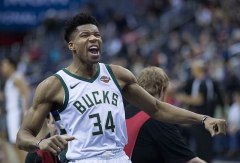
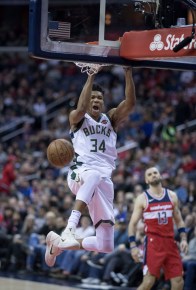
Giannis Antetokounmpo and the Bucks blew out the Pistons 121-86 in Game 1 of their 1st round series. (Wikimedia Commons)

For some odd reason, the NBA has more than half the league reach the postseason. It really doesn’t make any sense. The lower-seeded teams almost never make a run to the Finals. It is rare for the bottom two seeds in each conference to even advance to the second round.

It has been seven years since a seven or eight-seed won a playoff series. Since the NBA moved to a seven-game series in the first round back in 2003, there have only been four times where the one or two seed failed to reach the second round. That means the higher seed in those series won 93.3 percent of the time. I get there is always a chance for an upset, but after watching Game 1 of the Bucks-Pistons series, I am pretty sure it isn’t worth it.

For a frame of reference, the NHL has the exact same set up, with 16 teams qualifying for the postseason, eight from each conference. They play seven games in each series. In the same time frame, the last 15 years, a bottom-two seed advanced to the next round 17 times (I considered the “wild cards” the NHL now uses 7 and 8 seeds.) Comparatively, NHL 7 and 8 seeds pulled off the upset 28.3 percent of the time, while NBA 7 and 8 seeds made it out of the first round just 6.6 percent of the time. NHL teams have a fighting chance. The NBA feels like a forgone conclusion.

With that in mind, it’s time to reformat the playoffs. Moving to a 12-team setup means the top-two seeds in each conference would receive a first-round bye. To avoid making that too much of a competitive advantage for the top-seeds, the first round should be cut to just three-game series once again. The NBA actually did this back before it expanded to 16 teams. The higher seed still has home-court advantage, hosting the first and third games. At most, this would give the top seeds a week off to get healthy, somewhat like the NFL giving it’s top two seeds in each conference a first-round bye.

This adds further incentive to the regular season, with earning a top-two seed now a priority for each team. It also would mean we trim the mediocre teams making the playoffs from the picture. Ideally, this should reduce the overall wear and tear on players as well.

Suddenly, the playoffs are much more competitive and intriguing from the start. A best-of-three series this season between the 76ers and Nets would be amazingly intense. As would Celtics-Pacers and Blazers-Thunder. The margin for error is shaved down immensely and provides an exciting introduction to the postseason, rather than the lackluster games we’ve seen so far (although that Raptors-Magic finish was pretty sweet).

After the initial three-game series, the ensuing rounds would all be best-of-seven affairs. Once we work our way down to the final 8 teams in the league, it is worth it to watch some extra basketball and see the drama unfold over a long series.

Change draft lottery odds

800px-rj_barrett_26_zion_williamson_-_keenan_hairston
Instead of playing a brutal 1st-round playoff series, the bottom seeds in each conference could have a chance to draft one of Duke’s incredible freshmen. (Wikimedia Commons)

One of the biggest issues the NBA has had to fight is teams tanking in order to secure a better draft pick. The league has the draft lottery in place to limit the incentive to lose. It even made some tweaks recently to dissuade teams even further by giving the teams with the worst three records the same odds of landing the top pick.

However, under my proposed system, there would be 18 teams in the lottery as opposed to the previous 14. That is going to require different odds to land the top pick.

The new odds would be as follows:
3 worst records – 11 percent
4th-worst record – 9 percent
5th-worst record – 8 percent
6th-worst record – 7 percent
7th, 8th, 9th-worst record – 6 percent
10th-worst record – 5 percent
11th, 12th, 13th, 14th-worst record – 3 percent
15th, 16th, 17th, 18th-worst record – 2 percent

A new lottery system would hopefully increase parity in the league by reducing the temptation to tank. It could also lead to significant playoff turnover from year-to-year if teams who came close to qualifying for the playoffs land a top-tier college player. Imagine what the expectations would be for the Clippers if they added Zion or Ja Morant.

These new odds also increase the chance for the teams who just missed the playoffs to land the top pick. In this scenario, the Spurs, represented as the last team to miss the postseason cutoff, would have a two percent chance to land Zion Williamson. The Charlotte Hornets, who were actually the last team to miss the postseason this year, only have a 0.5 percent chance. It is small, but this change is significant. That’s the difference between having 200-1 odds and 50-1 odds.

It might be a little tricky then for the teams truly lacking talent to build their way back up, but it would require shrewd drafting and smart team building, overall increasing the competitive landscape of the league.

Looking ahead

Obviously, these would be some drastic changes for the league to undertake all in one year. It would probably need to be spread out over time.

There are some obvious financial issues that would come up as well. Fewer games being played each season likely means less lucrative television contracts. However, producing a better night-to-night product could replace some of the value lost in terms of volume of games to sell. Additionally, Silver is rumored to be interested in adding some sort of midseason tournament as well, which could potentially offer another incentive for television deals.

The only thing that seems clear is that change is on the horizon for the NBA. Silver has proven to be one of the most open-minded and progressive commissioners in sports history, willing to push the envelope on what is accepted and use other sports as an inspiration for change. With the league looking to embrace the future, there is no doubt resetting the competitive format is the place to start.

Quit Telling Me the NBA Season Doesn’t Matter

A few weeks ago, Chris posted an article claiming that NBA season should not be watched. The main rationale for the article was based off the fact that the NBA faces the inescapable reality that the Warriors will be the 2018-2019 champions. However, I think this season, like any other, has many different reasons to watch. This article appears early in the season, but my reasons still stand. Through these first few weeks, we’ve seen the NBA with higher ratings than ever, but that only scratches the surface as to why the NBA is more interesting than ever. I won’t focus on it heavily, but just keep that in mind.

Wizards v/s Warriors 03/02/11
Golden State is just the latest in a long line of NBA dynasties. (Wikimedia Commons)

First, contrary to what Chris would have you believe, the dominance of Golden State is one of the main reasons why the NBA is must-watch entertainment this season. The NBA and all of the other major sports in the US are at their height in watchability when there is a dominant dynasty.

People remember eras based off those dynasties. For example, the Showtime Lakers or Jordan’s Bulls are what fans remember from the late 80’s through the 90’s. The Warriors are probably the first true dynasty since the Shaq and Kobe Lakers. The “Heatles” and the Spurs were both amazing teams, but they were never truly head and shoulder above the competition for more than a year.  

Continuing on this, dynasties become must watch because fans hate watch them and to see if they will chase the ghost of previous dynasties. People love to watch dynasties lose, there is no denying it. You could go to any average sports fan and they want to see teams like the Patriots and Yankees, both dominant teams in this century, fail to get a championship. The sheer possibility that these top teams come up short is a compelling enough reason to watch in its own right.

The Warriors are no different. Go to any forum that discusses the NBA and it will be full of users who want an end to the Warriors. On the other side of this, however, fans tune in to see if records will be broken. One of the most watched games of this past decade in NBA was when the Warriors got to win number 73, becoming the new kings of the regular season. The new ghost for Golden State to chase this year is becoming the first team since Bill Russell’s Celtics to go to five straight NBA finals. Ultimately, the Warriors, the reason many people claim the NBA is pointless, is one of the most enticing parts of this season.

The other article also does not give credit to the growth of up and coming teams. Fans of bad teams only want to watch the night-to-night growth of their young players. While going through a rebuild they set aside the fact that for the next few years a run to the NBA Finals is only a pipe dream.

39004611954_72a7c08b6a_b
The Bucks are one of the best storylines of the young NBA season as the last undefeated team in the league. (Wikimedia Commons)

Kings fans watch to see if De’Aaron Fox will go super saiyan. I am a proud Knicks fan and my reasons for watching this season is to see how Ntilikina improves in his second season and how the trio of Knicks rookies fair in their inaugural seasons to name a few. Young players attract fans, but young coaches do too. How will their new system affect the team? During the offseason, almost a third of the NBA hired new head coaches. Coach Mike Budenholzer is one coach I am most the intrigued about because I think he will make the Bucks a top four team in the East.

In the end, many fans worry that the Warriors will make the NBA unwatchable this season. However, I think Golden State should be the least of peoples worries when it comes to the watchability of the NBA. Nevertheless if dynasties are not your thing, there are too many up and coming players and new head coaches this season to not watch.