Who are the next three up?

We get it. Jameis Winston and Marcus Mariota are the top two quarterbacks in this draft. It has been overanalyzed and, at this point, just taken as a fact. The topic that has been mostly skated over is the next three quarterbacks in this draft after them. For the most part, experts have agreed that the prospects in play are Garrett Grayson, Bryce Petty and Brett Hundley. No one can seem to agree on how to rank them though. None of these guys have very similar backgrounds nor do they seem to have like skill sets. It’s time to get to know the other quarterbacks in this draft.

Bryce Petty, Baylor
Height/Weight: 6’3”/230
Age: 23
The red-shirt senior had another successful year at Baylor. Petty led his team to a bowl game against Michigan State and looked set to win before a stunning comeback by the Spartans. The only other game that Baylor lost was to West Virginia. Petty demonstrated that he has a reliable arm, throwing over 400 passes in two years as Baylor’s starter. He is a talented player with enough mobility to extend plays. He demonstrates good zip on his on most of his short to intermediate throws. He doesn’t possess a cannon so that he can hit receivers on a line, but he leads his receivers well, allowing for them to run onto the ball.

Some concerns can be raised about his consistency. Petty aired out the ball with over 325 yards in two straight contests before he turned in a 111-yard, 31.8 completion percentage outing at Texas. Petty also seemed to throw his interceptions in clusters. He would go weeks without tossing one before getting picked off twice against TCU and Oklahoma State. Some other concerns rise when you look and see his yards per attempt and touchdowns fell while his interception total rose. Another major knock is the system he played in college. He used only a one-read system that never really required him to run through his progressions, something he will desperately need to do at the next level.

Overall, I think Petty is a solid player who has the right physical tools to succeed in the NFL. He needs a year or two to polish his mechanics and learn a pro system but he could prove to be a fringe starter one day. If nothing else, he will be a solid backup for a number of years in the league.

Predicted Round: Fourth
Ideal team: San Diego. Petty would get to learn from Philip Rivers for at least a year before the veteran potentially left town. Mike McCoy, as a former quarterback, would likely be a good coach for Petty as he learns to adjust

Brett Hundley, UCLA
Height/Weight: 6’3”/226
Age: 21
There is a lot of potential for this kid. He is tough, determined and athletic. Hundley is a dual-threat quarterback but that does not mean that he cannot throw. Hundley has already shown plenty of development as the quarterback of UCLA. He is a three-year starter and improved his completion percentage every year while cutting down on his interceptions. What was impressive too was that Hundley managed to avoid making multiple mistakes in games. He never threw more than one interception in a game all season. Most importantly, Hundley has shown that he is willing to take a hit when he makes a throw.

Some concerns can be raised about how much he throws the ball, falling below 400 attempts in each of the last two season. He also never even came close to matching his yardage total from his first season. His touchdown passes fell every year as well, dropping to a middling 22 in 2014. Hundley also has a lot of criticism for his lack of an internal clock. He took 125 sacks in 3 seasons, which can’t all be on him but that is a really high number for it to be all on the offensive line. Hundley will also need to improve his velocity on throws and find a way to avoid short arming them.

Hundley has a lot of developing left but he has already shown he is capable of being coached. It shows in his stats. Hundley could be a very difficult player to stop if he takes time to work on his mechanics. He needs to improve his release and body movement. Hundley is a lot like Colin Kaepernick, just without as strong an arm.

Predicted round: third
Ideal team: Denver Broncos. Hundley would obviously be able to learn from one of the greatest quarterbacks of all-time. On top of that, he would be in a system that relies heavily on plays from the gun and lots of play-action, which is what Hundley did a lot of at UCLA. 

Garrett Grayson, Colorado State
Height/Weight: 6’2”/216
Age: 23
One of the more unknown prospects in this year’s draft, Grayson has been a bit of a late riser. He spent the last two years as the starting quarterback for Colorado State, showing vast improvements from his first to second year. Grayson tossed 32 touchdowns to only 7 interceptions with just over 4,000 passing yards. He wasn’t always consistent but Grayson managed to post absurd completion percentages at times this season, going above 70 percent on 5 separate occasions. Grayson displayed his amazing deep ball touch throughout the season. Grayson has worked in multiple offensive sets and demonstrated great poise in the pocket.

Grayson needs to work on some of his underneath throws. He has great arm strength but occasionally will lead his receivers too much, setting them up for big collisions. Grayson’s mechanics need a little bit of refinement as well. His release is a little elongated. He has been known to be a little slow in his progressions and fails to get into his drop back quickly enough. Grayson never really got the chance to play against top competition in the Mountain West Conference. The best teams Grayson faced all season, Boise State and Utah, beat him by a combined total of 48 points.

There is talent there, that is for sure. Refining that talent will be the challenge team will encounter with Grayson. He has a great deep ball, which is something a lot of prospects do not. He has a lot of the makings of a great NFL quarterback. Grayson needs some development, but he definitely has the potential to be a starter one day.

Predicted round: third (before Hundley)
Ideal team: New Orleans Saints. Learning from Drew Brees for a year, another quarterback who is slightly undersized, would be a blessing for Grayson. He has made a career so far out of a deep ball thrower, which the Saints offense does a lot of. It would be a good fit and allows Grayson to develop for a year or two.
What if Matt Barkley didn’t return for his senior year?

Remember back in 2012, when there was a possibility that we could see one of the best quarterback drafts in NFL history. Andrew Luck and Robert Griffin III were the top prospects with Ryan Tannehill viewed as a nice consolation prize. However, there was a large contingency that believed there was another quarterback worthy of a top ten pick who ended up staying school. Matt Barkley, who some argued would have competed with Luck for the top pick, returned to USC for his senior year. He showed some major relapses and he ended up being a fourth round pick in 2013. But what if the former Trojan decided to head to the NFL a year early? Nothing is for sure but you can imagine a lot would change.

Barkley was highly regarded but I think it is likely that during the pre-draft workouts, Luck and Griffin would put some distance between themselves and the kid from USC. However, I think Barkley would still rate higher than fellow first rounder Ryan Tannehill. On draft day, Luck and Griffin still go one and two. None of the teams from picks three to seven really needed a quarterback. Miami sitting at number eight was ready to move on from Chad Henne and with Barkley still on the board, the Dolphins would gladly draft him. Barkley would join a Fins team with another former USC star in Reggie Bush led by rookie coach Joe Philbin. If Barkley began playing anything like he did during his senior season or how he has in the NFL with Philadelphia, there is a really good chance that veteran signal caller Matt Moore beats out Barkley for the starting job.

So this also means that there is no way for the Dolphins to take Tannehill, who continues to fall down the draft board. He doesn’t fall too long because sitting at number twelve is a team in desperate need of a young quarterback. The Seattle Seahawks had Tavaris Jackson under center the year before and desperately needed an upgrade. Matt Flynn was brought in as a potential replacement but that wouldn’t stop Seattle from picking up the talented Tannehill. Tannehill was viewed as a bit of project and based on how much the team was paying Flynn, the rookie from Texas A&M would probably be given a year to sit on the bench.

The 2012 season looks extremely different as well. Seattle struggles under Flynn and by the end of the season, Tannehill gets some reps as the starter, but the Seahawks miss the playoffs. Green Bay win against Seattle in week 4 with no Fail Mary game. This means that Green Bay finishes the season with the second best record in the NFC. Instead of Seattle and Minnesota in the playoffs, Chicago and Philadelphia make the postseason in their place. The Bears get a major showdown with the third seeded 49ers. The Eagles travel to Washington for a duel of rookie quarterbacks. Robert Griffin III versus Russell Wilson. Oh right, did I forget to mention that the Eagles snag Wilson in the third round because Seattle took Tannehill? Philadelphia falls next week to Atlanta who meets Green Bay in NFC championship game. Green Bay dispatches Atlanta for a matchup with the Ravens in the Super Bowl where Aaron Rodgers outduels Joe Flacco for his second straight Lombardi Trophy.

Andy Reid still leaves in 2013 and Chip Kelly cannot wait to get his hands on an offense led by Russell Wilson. Seattle is still good but not great with Tannehill under center. They miss the playoffs for a second consecutive year. That means no Legion of Boom and no Super Bowl rout of the Broncos. With the Seahawks out of the picture, the 49ers win the NFC West and the Nick Foles led Cardinals make it as a wildcard. Foles was drafted by the Cardinals when Philadelphia no longer had interest in him in the fourth round in 2012. The Eagles get a boost with Wilson under center to the second seed while the 49ers take the top seed. Green Bay beats New Orleans in the wildcard round while Philadelphia takes down Arizona. The Niners beat the Packers in the divisional round setting up a meeting with Russell Wilson again in the NFC championship game, this time with the Eagles. Philly’s offense of DeSean Jackson, LeSean McCoy and Jeremy Maclin is the Greatest Show on Turf 2.0 and Philadelphia finds itself in the Super Bowl against Peyton Manning’s Broncos. With no incredible defense to haunt him, Manning plays great and narrowly beats Philly in a shootout giving Manning his second ring.

Now some of you might be saying, what about Matt Barkley and the Dolphins? Don’t worry. I’m getting to that. Barkley never develops quite how Miami wants. So in 2014, they are in the market for a new quarterback. Joe Philbin decides to go after a different Texas A&M quarterback with their first round pick by the name of Johnny Manziel. For once, the Cleveland Browns don’t completely lose out because they get Carson Palmer when Arizona no longer wants to sign him with Foles under center, so the Browns don’t want Manziel anyway.

So in short, Russell Wilson is an Eagle, Nick Foles is a Cardinal, Carson Palmer is a Brown, Rodgers has two rings, Manning has two rings and Wilson ends up with none. The Legion of Boom never happens in Seattle and Miami ends up with Manziel. All of this just because Matt Barkley decides to leave school one year sooner.

Major League Baseball has laid out the blueprint

So now the question is, when does everyone else start catching up? Major League Baseball suspended four different pitchers in the past 2-plus weeks for use of a steroid called stanozolol. Popular among body builders, the drug reportedly helps athletes lose fat while maintaining lean body mass. Ervin Santana, David Rollins, Arodys Vizcaino and Jenrry Mejia all tested positive for the steroid under the new MLB anti-doping policy. The league also announced they will be investigating the repeated appearance of the drug, using the 2013 Biogenesis investigation as a model. Clearly, MLB has made major strides in its handling of steroid usage and cases showing an initiative to clean up the league.

Despite the obvious success MLB has seen since the implementation of the new system, other professional sporting leagues have yet to follow. The NFL has some basic steroid testing in place but not to the full extent possible. The NBA and NHL have relatively weak systems that do not pose much of a threat to players who are using these drugs. Each of them have clearly outlined systems but none of them are being enforced anywhere close to as heavily. Let’s go through some basic comparisons.

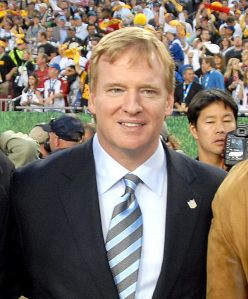
Roger_Goodell

NFL
The NFL is probably next in line behind MLB but they are still fairly far behind. Players are subjected to random drug testing during the season. If a player were to test positive for steroids, HGH or stimulants, they would immediately receive a 4-game suspension. On a second offense, players are suspended for ten games and a third offense results in a minimum two-year ban from the league and all related activity. Players have to apply for reinstatement as well following the minimum two years. If a player tests positive for stimulants during the offseason, they are referred to the league substance abuse program. The NFL also does a relatively good job of enforcing the drug policy, with roughly 100 players suspended since 2010. The HGH testing is new for the league though, which shows they are still conscious that the policy can be tweaked and improved.

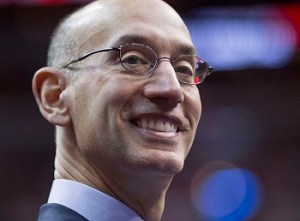
Adam_Silver

NBA
The NBA seems to have a solid program in place. NBA players are subjected to a reasonable number of tests per season with four random tests during the course of the league year. Players can even be tested on reasonable cause, determined by a third-party expert. However, the penalties are pretty minor with a first offense resulting in only a ten game suspension. A second offense means the player only earns a 25-game ban and a third offense results in a yearlong ban. A fourth offense would result in a permanent ban from the league. That is all well and good, except when you look at the numbers. The NBA has suspended exactly three players since 2010 for violating the NBA drug policy. That includes drugs of abuse and other illegal substances outside of steroids. Those numbers are not too high when you compare them to anywhere else.

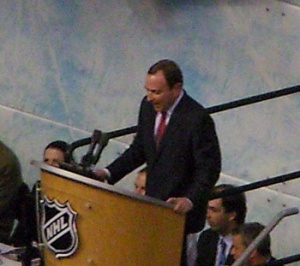
Gary_Bettman

NHL
Hockey, like basketball, has never really gripped the nation with a major drug scandal. The NHL does a fairly good job of testing as many players as possible. Each player is subjected to two unannounced drug tests per season and one of them must be a team-wide test. The number of tests is on the smaller side unfortunately but the punishment is better than the NBA and probably on par with the NFL. A first-time offender receives a 20 game suspension, a second offense results in a 60-game suspension and a third offense is a permanent suspension. Like the NFL, players can apply for reinstatement after the minimum two years are served. The league does not crack down too much on players. They have only suspended three players under the new performance enhancing drug policy, but it was only launched last year.

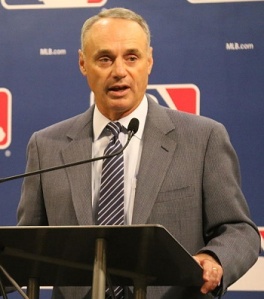
Rob_Manfred

MLB
It is rare that I think baseball is truly way ahead of the curve when it comes to the major sports in the United States, but for steroid testing, it isn’t even close. Every year at the start of spring training, each player is subjected to a urine and blood test. The league then randomly chooses 3,200 urine and 260 blood tests of random players throughout the course of the season to catch those who begin doping following the spring training tests. The league also selects certain urine tests to undergo carbon isotope ratio mass spectrometry analysis. MLB, like the NBA allows reasonable cause testing, something the NFL and NHL have not yet implemented as far as I could find in the bylaws. MLB is also much harsher with its punishments. The league hands out an 80-game suspension following a first offense and a season-long suspension after a second offense. A third offense will result in a permanent ban with a minimum of two years required before a player can request reinstatement. MLB has suspended 19 players since May of 2012 and that doesn’t include 5 minor leaguers as well.

Overall, there is still clearly cheating in American sports due to performance enhancing drugs. Baseball has taken the right initiative with the intensive measures used in its testing. The key thing that MLB has that other sports desperately lack is the public shame that comes with steroid use. Dozens of players have been held out of the Hall of Fame due to their checkered past with steroids. It creates a major stigma for the player and MLB is continuing to enforce the image that steroids make you a cheater. The NFL does not do that, often refraining from using the word steroids, opting instead to refer to them as performance enhancing drugs. The idea is still the same, but the stigma that comes with being called a steroid user is just not there. The NBA’s and NHL’s rate of suspending players is a joke.

And none of this seems to be a problem for them. According to an article from ESPN, NBA general counsel, Rick Buchanan, was quoted saying, “We think we have a program that is as good as any other in pro sports.” That is the underlying issue. No one is putting enough pressure on these other leagues to make a change. Fans agonized over MLB’s faulty system until they made some major improvements, and now the league has easily the best anti-doping program of any American sport. We might all like to think that these leagues will strive for change on their own, but without a little push from their fans, there is no chance that the NBA, NFL or NHL make the necessary moves to truly fight steroid use in American sports.

Are you kidding me Mayock?

Seriously? After all this time now he makes a change. Based on what? For those who are unaware, NFL Network draft expert Mike Mayock made a major switch today in his big board rankings. He moved former Oregon quarterback Marcus Mariota ahead of his Florida State counterpart Jameis Winston. This may seem like no big deal on the surface because both players are still being evaluated but there seems to be no reason for the change. Mayock cited that the new rankings are being released with pro days being wrapped up but that doesn’t provide any answers either. Winston had a stellar pro day workout with only 11 incompletions on over 100 throws. Mariota on the other hand, threw only 7 incompletions but on only 65 throws. The numbers aren’t even what was concerning. The wide consensus following the workouts was that he had nailed it and Mariota was “underwhelming.”

With all of that said, I have no idea why Mariota would get the bump up to the number one positional spot for quarterbacks according to Mayock. He might just be one guy but he is a bit of a draft guru as NFL Network’s answer to Mel Kiper Jr. and Todd McShay. What he says usually holds some weight. Now this makes me wonder if Mayock knows something the rest of us don’t. Has he been talking to teams who feel that Winston hasn’t won them over? Whatever the case may be, it raises some concerns, even if they are minor, about Winston.

Another report appeared today, which should also shake some confidence in the Winston camp. Tampa Bay hosted Mariota for a private workout earlier and Buccaneers offensive coordinator Dick Koetter called the workout “outstanding.” They raved about his footwork, athleticism and speed. The workout also came from the Bucs, not from Mariota. All of these signs definitely point to a boost in Mariota’s draft stock. After being considered the lock as the top pick for so long, Winston’s move down comes as almost a shock for fans.

However, I think this might be part of the learning experience from last year. Louisville quarterback Teddy Bridgewater had a very tough pro day last year and that led to him dropping all the way from the first projected overall pick down to being actually selected thirty-second overall. Bridgewater went on to be arguably the best rookie quarterback in the NFL last season. That mistake on many team’s part probably underlines why teams have not made as big a deal this year about Mariota’s lackluster pro day. It doesn’t mean a ton but these trends should be noted at the very least when it comes to projected who might be selected where.

To be honest, my assessment of the two is that Winston is more pro ready with a lower ceiling, while Mariota is a little rawer with a much higher ceiling. In the short term, Winston will be a much better pick. He will make a big difference for a team next season but he won’t improve a ton over his time in the league. He will likely become a steady, above average starter if he can work out some of his accuracy issues and ball security. Meanwhile, Mariota has the potential to be a game changer once he fully develops. He will take at least one season to get comfortable in a true pro system but he has enough talent that he could become an elite quarterback if he gets the right coaching and stays healthy. His concerns will be more just grasping the offense gameplan.

If I had to pick though, I think I would go with Mariota. He projects better in the long term and he definitely has shown more maturity off the field. He has demonstrated his ability to buy into a system and he definitely a player that I would feel comfortable leading my team for the next 15 years.

NFL Cornerstones: Cornerback

Cornerstone players will be a recurring theme on Second Look Sports where I look at each position in a certain sport and I choose a cornerstone player to build my franchise around. I have a couple of parameters for this selection though. I will factor in age, potential, injury history, experience, reputation and production. I think this should be a fun and interesting topic to discuss on here. I hope you all agree.

The selection: Joe Haden, Cleveland Browns
Honorable Mentions: Richard Sherman, Patrick Peterson, Chris Harris Jr., Kyle Fuller, Vontae David

Sorry Richard Sherman, you don’t make the cut here. Sherman is a fantastic corner who has a nose for the football and can make some of the most athletic plays by a corner in the last couple of years, but he has some things that hold him back here. First of all, he plays on only one side of the formation. In Seattle’s defense, Sherman does not have to play both sides of the field, which means that he doesn’t always matchup with the best receiver on the field. That drains Sherman of some of his versatility. Don’t get me wrong, Sherman is a fantastic corner, but he is not the guy I want to build around right now.

Instead, I head over to Cleveland, where perennial Pro Bowler Joe Haden plays his football. The 26-year old has good size at 5’11” and excellent awareness on the field. The thing that many will focus on from the very beginning here is the number of interceptions has in his career. Sherman more picks, despite playing one less season. Haden does have a solid 0.22 interception per game ratio, which is on par with both Patrick Peterson and Vontae Davis. However, at corner, it is not always about interceptions. A true lock down corner does not allow his matchup to catch the ball. No one does that quite as well as Haden.

Over the past five seasons, the Browns’ cover man has ranked in the top six for passes defended, with the exception of 2012 where Haden was injured. Haden is also averaging an absurd 17.4 pass break-ups per seasons, despite only playing 11 games in 2012. If we exclude break the number down to knock downs per game, his number of 1.21 ranks better than everyone else considered. In fact, Sherman is the only other corner with an average above one. Haden is test early and often and he clearly holds up well under the constant bombardment.

Haden is a talented tackler as well. He records roughly 4.25 tackles per contest, best of any of the corners considered and the only player with an average over 4. The one knock here is that Haden often get help on his tackles. He has been assisted on roughly 18 percent of his tackles throughout his career, which is essentially identical to Sherman. Meanwhile, Peterson dominants as an open field tackler as he has been assisted on only 9 percent of his takedowns. Haden obviously has a nose for the ball, but he is not the only one in on the play.

What makes Haden the ideal corner is his consistency. He has tallied at least three interceptions per year over the past three seasons. He has registered at least 18 passes defended when he has played at least 15 games. Haden is a force to be reckoned with at the cornerback position. There few players who manage with the same amount of poise and skill at the position. He still has four strong years left of him playing at the highest level. If I needed to pick a corner to build a defense around, Joe Haden is my guy. No other corner gives me the combination of intangibles, talent and versatility that Haden possesses. Without a doubt, he is one of the best corners to take the field in the past 20 years.