New home for 2022 World Cup should be obvious

The FBI took down FIFA, the US Men’s team shocked the Netherlands in an international friendly and US Women’s team landed in Canada for the 2015 World Cup. It’s been a good week for soccer in the United States. It could get even better than that too if the FBI finds that the bid allocations that FIFA gave for the 2018 and 2022 World Cups were under the circumstances of a bribe or payoff. That would likely mean that both of the World Cups would be reallocated. 

Russia_2018_World_CupWhere exactly the tournaments would be reassigned is still up for debate. A reasonable case can be made for England hosting the 2018 edition because the preparation required is minimal. Sure scheduling might take a little while but the reality is that England is the soccer hub of the world at the domestic level. Britain has 12 stadiums that have a seating capacity of at least 38,000. It also has the historic Wembley Stadium, which would be an excellent site for a World Cup final if you ask me and seats 90,000 fans. The seating capacity is pretty comparable to what Brazil had last summer as well. On top of all of that, England hasn’t hosted a World Cup since 1966.

The reassigning of the 2022 edition is a little trickier. There were several nations that were in the mix and shockingly Qatar was selected. Beyond any tampering that might have gone on with the voting, Qatar shouldn’t be hosting the World Cup anyway. Summer temperatures can reach a startling 120 degrees Fahrenheit and in preparations for the tournament roughly 1,200 migrant workers have died. That number is sure to climb higher as well as we are seven years away from kickoff.

So it makes only too much sense to change the site of the 2022 World Cup. The question that remains is where would it be moved to. The logical answer here would be the nation that finished second in the voting, which was the US.

World Cup StampOn a lot of different levels, a move to America makes sense. From a monetary standpoint, the US would be the best option. The 1994 tournament held in the United States still ranks as the most lucrative one in history. You have to wonder a bit why FIFA would avoid returning to the US in favor of Qatar. Sure, FIFA officials might have been bribed but America would have generated infinitely more revenue for FIFA than Qatar could ever dream of.

There are plenty of critics who claim that soccer is not a big deal in the United States. However, the 1994 World Cup remains the most heavily attended tournament ever. Over the course of all 52 games played that year, the USA brought in over 3.5 million fans. The US still has the highest attendance average as well at roughly 69,000 fans per game. For some reference, the average attendance of a World Cup match if you remove the numbers from the year the US hosted is around 43,250 and the average in Brazil last year was only 53,600.

Preparations for the US wouldn’t be overly difficult either. They have more than enough stadiums to compensate all of the games that need to be played. I went through and found the top 12 stadiums that America could use as host fields. The Citrus Bowl, the Rose Bowl, Ohio Stadium, Bank of America Stadium, Lincoln Financial Field, LP Field, Sanford Stadium, University of Phoenix Stadium, Sports Authority Field at Mile High, the Cotton Bowl, Arrowhead Stadium and Soldier Field would all work well for hosting the 64-game schedule.

1280px-The_U.S._Embassy_in_Pretoria_Glows_at_NightThat would bring World Cup matches all over the country and let everyone enjoy the action. Florida, California, Ohio, North Carolina, Pennsylvania, Tennessee, Georgia, Arizona, Colorado, Texas, Missouri and Illinois would all have the opportunity to host a game. All of the fields use grass as the playing surface as well so there can be no complaints about the awful conditions of playing on FieldTurf. Travel might be slightly difficult but as long as there is as little coast-to-coast movement as possible, it should work out fine.

It also leaves a few options available for where the final could be played. It could once again return to the Rose Bowl, which is where it was played in 1994, or it could be hosted in Ohio Stadium, home of the Ohio State Buckeyes. What makes Ohio Stadium appealing is its capacity of 102,000 fans. The smallest stadium I selected was Soldier Field and that still has a capacity of 61,500. Based on the average attendance back in ’94, I don’t think there should be an issue with filling these stadiums.

At this point, it seems to be a matter of when not if regarding changes of location. FIFA is in turmoil right now and if the new brain trust that takes over has any hope of avoiding corruption being tagged to their name, they will start fresh. I might be a little bit biased in wanting the USA to be chosen as the 2022 host but the selection would make a ton of sense. It would be another step forward for the growth of soccer stateside. Hopefully, the US gets the chance to make it happen.

FIFA is falling apart

If you are having a bad day, just think about how FIFA’s day has gone. You wake up in your hotel in Switzerland room preparing for a big conference full of board elections and then the FBI comes crashing in to arrest 14 of your members. That’s how FIFA’s day started today.

Yup, the United States made it all the way to Zurich, Switzerland to arrest nine FIFA officials and an additional five board members on counts of corruption, conspiracy and racketeering. The issue calls into question the allocation of the 2018 and 2022 World Cups and business surrounding CONCACAF and CONMEBOL.

Of those arrested is FIFA Vice President Jeffrey Webb, which is definitely not a good sign for the organization. Surprisingly, Sepp Blatter’s name has yet to come up as one of those arrested.

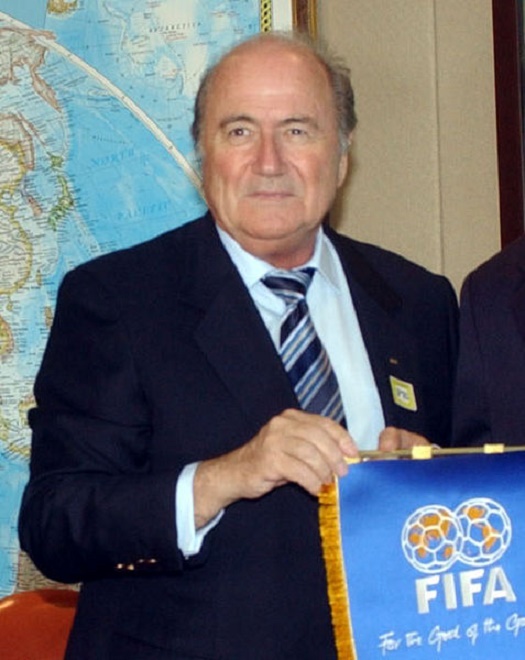
Sepp_BlatterWith how easily athletes seem to get off today for breaking the law and such, you might think this will blow over soon. It doesn’t seem like it though, as US attorney general Loretta Lynch was quoted when speaking about the charges in a statement from the Department of Justice. She explained that the charges indicate “corruption that is rampant, systematic and deep rooted both abroad and here in the United States.”

She went on to add that “it spans at least two generations of soccer officials who, as alleged, have abused their positions of trust to acquire millions of dollars in bribes and kickbacks.” How many millions you might ask? Lynch mentioned $110 million in bribes just surround the 2016 Copa America tournament.

So no, this is not just going to blow over. FIFA has a gun to its head at the moment and is definitely starting to sweat. Reportedly, already two corporations and four individual defendants have pled guilty and more are sure to come.

“Today’s announcement should send a message that enough is enough,” said Acting U.S. Attorney of the Eastern District of New York Kelly T. Currie.  “After decades of what the indictment alleges to be brazen corruption, organized international soccer needs a new start.” It seems like the US government is intent on reworking FIFA.

And Currie has a point. Sepp Blatter’s being up for election as President for the fifth consecutive time, FIFA’s treatment of Brazilian laws in the months leading up to the 2014 World Cup and the rumblings of corruption surrounding the next two World Cups dictate enough cause to start fresh.

World Cup StampAnd you can expect more from this too. Currie added at the end of her statement, “Let me be clear: this indictment is not the final chapter in our investigation.” That is a daunting prospect for FIFA. And the pressure isn’t just coming from the US either. Swiss officials were the ones that made the physical arrests in Zurich on behalf of the FBI. Following that, the Swiss Office of the Attorney General announced that it would conducting a separate investigation of the voting process for both the 2018 and 2022 World Cups.

Two different countries investigating you for corruption. Yikes. Definitely not a good sign. But FIFA continues to go on as if nothing is wrong. FIFA’s Director of Communications and Public Affairs Walter de Gregorio held a press conference earlier today at which he announced FIFA’s plan to proceed with preparations for both World Cups. FIFA also issued a press release, which details the many ways that FIFA is cooperating and reiterated its excitement at energy surrounding the investigation.

The funny thing is that what FIFA has done in response only makes me hate them more. Rather than acknowledge that yeah, this is an issue, it is content to sit back and act as if nothing is wrong. FIFA doesn’t even react to say that it is surprised by the arrests and will do whatever it can to help. It includes a line that indicates that it feels the investigation is redundant. And what organization announces its excitement that it is being investigated for corruption?

The whole situation is insane. It was only a matter of time before FIFA fell. Foreign governments have been on their heels for years and the ugly side of FIFA continues to be revealed. Corruption is part of its DNA at this point. There is no denying it with the number of scandals that have broken into the news that involve one FIFA executive or another. This seems to be the day of reckoning for FIFA but will it be enough?

There is no doubt in my mind that FIFA needs a fresh start. The problem is that it needs to start with the replacement of Sepp Blatter, who is widely expected to win reelection. Here’s to hoping that the Department of Justice comes up with some damning evidence against him in the next 24 hours or that these new allegations are enough to taint Blatter’s name (because somehow it’s not tainted enough) to the point where he would lose the election. Unlikely, but one can dream. Just imagine what FIFA without Sepp Blatter could be. I think it needs to happen as soon as possible. Even if Blatter isn’t behind all of this, holding on to an old regime rampant with it is not a great way to begin moving forward.

The curious case of Jordan Morris

Photo from ussoccer.com

In this day and age, college athletes cannot wait to make it to the next level. Hundreds, if not thousands, of them make the jump every year to join professional leagues and get their true career underway. College basketball faces the perennial “rent-a-players,” in the words of Bo Ryan. College football rarely sees player make it all the way to their senior year; at least not the top-rated prospects. It is nice to hear a story now and then about a player who is putting his academics first and wanting to stay in school. Then you have Jordan Morris, who’s story is probably a little bit different than most. In a sport like soccer, notorious for signing players at the age of sixteen and beginning their professional careers right away, Morris is straying from the beaten path. He is playing international football and spurning professional contract offers, determined to do things on his terms.

A few short years ago, Morris began playing for Eastside FC to start his youth soccer career. From 2009 to 2012, Morris was a mainstay on the Seattle based club team, garnering some major attention nationwide. Eastside is a premier soccer club, one of the highest levels of youth soccer available. The program helps develop promising soccer players as young as nine years old, and helps them take the next step whether it be college or the pros. Eastside has generated hundreds of college players across the country and Morris was actually one of six player to join the Seattle Sounders FC Academy when he left in 2013.

In early February of 2012, Morris committed to Stanford, intent on joining the men’s soccer team. He spent most of 2012, into 2013, playing for the Sounders academy team before officially enrolling in school. Morris made a splash his freshman season for the Cardinal, scoring six goals and tallying seven assists in 21 appearances. Stanford made the NCAA tournament for the first time in four years, but eventually fell in the round of 16 to PAC-12 rival Washington. 2014 saw Morris’ numbers drop across the board but he also appeared in six fewer contests.

The reason he missed more contests was due to his appearances on the US men’s U-20 and U-23 national team. Morris made a decent impact despite the small sample size, particularly with the U-23 squad. In only four appearances, Morris tallied three goals. It became clear that Morris was an international caliber player, or that he could develop into one if he was given enough caps and found himself in the right system. The next logical step came when he appeared for the senior squad for the first time against Ireland in August of 2014. Morris took the next step when the United States faced off with Mexico just 11 days ago and he scored the opening goal of the match, the first of his international career.

Clearly, Morris has quite the resume and is obviously on the radar of MLS clubs, but this is where things get interesting. He has international caps, familiarity with the system and potential to make a good amount of money for a US soccer player, but Morris wants to stay in school. So far, Seattle has offered him a contract on a number of occasions now, most recently just this past week. Reportedly, the offer was one of the most lucrative homegrown contracts in MLS history. Morris once again turned it down though, maintaining that he wants to return to Stanford for his junior season. After the season is over, Morris has hinted that he might consider joining the Sounders ahead of the 2016 MLS season. He has also said that he will just see where his soccer takes him. That could just as easily mean that Morris stays for his senior season, or even goes to play in a different league.

It is refreshing, in a way, to see a 20-year old kid turn down the fame and fortune of professional sports to continue playing the sport for just the simple enjoyment. Morris has had a lot of success at Stanford and definitely has some unfinished business to attend to at school. The Cardinal entered the NCAA College Cup ranked sixth overall and were upset by in-state opponent UC-Irvine in their first game. That has to leave a bitter taste in Morris’ mouth. I can understand why the kid wants to go back and take another stab at National Championship. Stanford is only graduating four players, only three of which were starters. Morris will come to the MLS (or another pro league) when he is good and ready. For now, he is going to keep having fun and enjoying his youth. Sometimes, money and recognition don’t win out. The love of the game does.

Klinnsman’s stinging criticism

The US Men’s National team manager made headlines last night after a press conference with FOX Soccer in which he took yet another shot at MLS. Jürgen Klinnsman criticized the league’s nine-month season claiming it severely hurt player development and fitness. He urged MLS officials to alter the season to be structured as an 11-month season, comparable with the rest of the world’s leagues operate. He felt that the inadequate training that MLS players are subjected to is a major reason for last week’s loss to Chile in an international friendly. “The MLS season goes nine months, and they should take a month off but then they should then go back to preparing themselves for their next year. A couple of guys haven’t done that and that’s why they are looking a little bit shaky right now. But we’re going to get them back on track and hopefully they learn out of it,” Klinnsman explained. While his words are another stab at MLS, Klinnsman might have a point.

The US went to half against Chile winning the match 2-1. The Chilean team stormed back and scored twice in the second half to come away with a 3-2 win. It was an international friendly, so it really doesn’t mean anything, but the United States is still fighting to prove that it belongs on the world soccer stage. Klinnsman was not wrong that the US looked a little out of shape in the second half of the match. He made the comparison to other major American sports, pointing out the expectations set forth for them. Klinnsman said, “Soccer is not there yet where the NFL or the NBA or the NHL are in terms of peer pressure. They don’t have that same sense of accountability here in the U.S. that they would have in Europe.” He is right. MLS is not there yet and the nine-month cycle probably is not helping.

The American soccer system has, for whatever reason, resisted conforming to the world format of soccer. The 11-month structure gives players time off during July and into August. My best guess is that MLS authorities have recognized that the summer months tend to be rather slow as far as sports go. The NBA and NHL wrap up in June and the NFL is in the lifeless part of its cycle, leaving just Major League Baseball. Competing with just one sport during those months makes it much easier for the league for the league to draw viewers and sponsorships. Unfortunately, MLS, as a result, finds itself out of sync with the transfer window that every other country uses. It leads to a confusing mismatch of off seasons that forms a disconnect. This means that while US teams are trying to build their rosters heading toward the season, as they are right now, the European leagues have ended their transfer period. It no longer allows players competing in league around the world to make the jump to the MLS right when teams are looking to add valuable pieces. It instead seals off MLS clubs from building to the potential that it could. This might not have been Klinnsman point but it plays into his argument.

Getting more specific regarding player acquisition and player development vastly differs from the US to Europe. The youth soccer system in Europe most notably does not include college soccer. Most European teams sign players to contracts as young as 16 and simply loan them to other teams in lower divisions to gain experience. College soccer is a great program in the US, but the level of competition and the availability of resources are well below that of youth systems in Europe. The development process simply is not strong enough to make it a top choice for the world’s best players. However, I think the culture of college soccer could change. In a world where college basketball players only spend one year in school and college football players frequently leave after their junior year, MLS could begin to see a shift to this model. Three out of the top six picks selected in the MLS SuperDraft were students who were leaving school early. That might not seem like much but it is a start.

The simple fact is that this isn’t basketball, hockey or football. Soccer does not have the nationwide popularity the other major sports do. It could come eventually. American soccer is growing in popularity and support. We saw that this past summer with the 2014 World Cup. MLS is slowly beginning to allure more fans with rising attendance rates and larger television deals. I have mentioned the impact that the stars of the 2014 World Cup for the US could have on MLS popularity. This is a big year for MLS. It has all the right ingredients to take another large step in the direction of being nationally recognized as a major US sport as well as a competitive domestic league on the world stage. Does the MLS need to switch to an 11-month system to really push its success? Maybe. I don’t think it would hurt and it would certainly help with getting on the same page with the National team manager. If you ask me, eventually they will have to, if the league truly wants to be taken seriously. Klinnsman has a point. Change is needed in MLS. It is coming. Just not as soon as he would like.

Defoe for Jozy: A rare trade in the world of soccer

It is rare in soccer that a trade is executed, even more so when it involves two international strikers switching continents. The MLS has plenty of intra-league trades but it is uncommon for one to happen with an EPL team. Yet, Tuesday Toronto FC and Sunderland announced they were swapping forwards as Jermain Defoe would be heading back to England and Jozy Altidore would be sent to Canada. The two are at very different junctures in their careers as they make the move back to the leagues where they each started their professional careers. Time to take a second look at how Altidore and Defoe wound up being part of this deal.

Defoe has been playing in the professional soccer system since he was just fourteen years old. He began with Charlton Athletics’ youth squad in 1997 before latching on to West Ham in 1999. By 2000, at only seventeen years old, Defoe made his first appearance with West Ham’s senior team. He was loaned to Bournemouth though for the remainder of the season. When he returned, Defoe became a mainstay for West Ham and he wound up registering 29 goals in 93 appearances. Defoe had become a hot commodity by 2004 and was transferred to hometown Tottenham Hotspur mid-season. It was around this same time that Defoe earned his first call up to the English senior squad. Once at Tottenham, Defoe really began to shine. He scored in his debut against, ironically, Portsmouth, whom he would later join for a season in 2008. He scored 43 goals in his first 4-year stint with Tottenham. He played 2008 in Portsmouth, scoring 14 goals in just 30 appearances. 2008 also marked a big year for Defoe on the international stage. He scored his first ever goal in competitive match and eventually became a regular on the 2010 England World Cup team. After the year with Portsmouth, he returned to Tottenham for another 4-year stint, scoring 47 more goals for the London side. By 2013 though, Defoe was getting a bit older and the MLS had come calling. More specifically, Toronto FC made a big push to land the English international. After signing Defoe, Toronto immediately loaned him back so he could remain with Tottenham until the start of the MLS season. Once playing in North America though, Defoe came out firing. He scored two goals in his first appearance for the team and ultimately scored 11 for Toronto over the course of the season. Now the 32-year old is heading back to the EPL where he had all sorts of success. Defoe sits 14th all-time with 124 goals in his career with a great chance to move a little further up that list.

On the other hand, England has been where Jozy Altidore has struggled the most. The New Jersey native started out playing for the IMG Academy as a teenager spending time with the U-17 national team. In 2006, the Metrostars, who are now the New York Red Bulls, took Altidore in the MLS SuperDraft. He spent most of that season earning his high school diploma and thus did not make his debut until August. Jozy quickly became a fan favorite in the greater New York area and would become the youngest player to ever score in the MLS playoffs by a staggering margin. In 2008, Altidore left MLS when Villareal, in Spain, bought him for an MLS record-shattering $10 million. Villareal loaned out Altidore over the next few seasons to Xerez, Hull City and Busaspor. Jozy never developed into the prized striker Villareal hoped for as he never scored more than 1 goal in a season. Villareal then shipped him to the Dutch team AZ Alkmaar, which ended up being a resurrection for Altidore’s club career. He was having plenty of success on the international level, having been an important part of the US’ Confederations Cup Finals run in 2009. Playing for AZ, Altidore scored 39 goals in just 67 appearances, sparking some major interest in England. Concurrently though, Jozy hit a dry spell at the international level, not scoring for nearly two years in a USA uniform. Shortly after getting on track for the National team in 2013, Altidore made a move to the English side Sunderland. Jozy once again struggled to find his way; Altidore only managed 1 goal for Sunderland in the 42 appearances he made. It was well known that Altidore was looking for a fresh start once again, and now he has one back in the league where he first garnered fame.

Both teams will be happy to bring in these new players. Defoe is a proven goal scorer who can spark a Sunderland team that has struggled to beat the keeper this season, as the club ranks second to last in the league in scoring. Toronto will be able to add a younger player in Altidore and drum up more popularity in bringing back another US international player to MLS. Altidore will join Jermaine Jones, Omar Gonzales, Mix Diskerud, Kyle Beckerman and Clint Dempsey and will play alongside Michael Bradley in Toronto. At this point, not many US international players are playing outside of MLS. We will have to see what this movement does for the team. Defoe has his chance to likely finish his career in England now. Altidore is getting another chance to start over. In the short run, I have to think that Sunderland are happy with the deal they landed. Toronto might get more out of it down the line but for the present, the English side definitely got the better hand in this one.