USMNT 2018 November Friendlies Preview

The USMNT has friendlies against England on Thursday Nov. 15th at 3 pm followed by Italy on Tuesday Nov. 20th at 2:45 pm. This is almost certainly Dave Sarachan’s last time in charge of the team and this might be my favorite roster he’s called in. First, a few quick notes from Sarachan (All of the below info is taken from US Soccer’s website).

  1. The 5 players still involved in the MLS Playoffs (Guzan, Long, Villafana, Adams, and Trapp) will join the camp after their games on Sunday the 11th (Thursday the 8th for Villafana). He didn’t explicitly say it, but we shouldn’t be surprised if these players don’t start the game against England on the 15th.
  2. Michael Bradley was not included because he already has experience playing good teams like England and Italy. Sarachan wants younger players to get that experience instead. Love this reasoning.
  3. (He didn’t say this but I’m adding it here) It’s very possible that some players like Brooks, Yedlin, Wood and/or Pulisic only play the first game and go back to their clubs early. Brooks has done this before. It’s just so that they don’t add too many minutes to their legs.

Now onto the 26 players available (originally 28; following each players name is their club; national team caps/national team goals):

GOALKEEPERS (3): Brad Guzan (Atlanta United FC; 59/0), Ethan Horvath (Club Brugge/BEL; 2/0), Zack Steffen (Columbus Crew; 6/0), Jonathan Klinsmann (Hertha Berlin/GER; 0/0).

  • Both Steffen and Guzan are still in contention for the #1 job. I don’t know that either has an edge on the other at this point. Steffen withdrew from this camp due to injury.
  • The #3 spot has been wide open but Horvath has started Club Brugge’s last three games in Belgium posting clean sheets in all three including a Champions League game against Monaco. I hope he gets in net for at least 45 mins.
  • Klinsmann was a late addition and hasn’t started for Hertha in Germany. I think US Soccer just want to take a look at him in camp, likely won’t see in-game minutes.

DEFENDERS (10): John Brooks (Wolfsburg/GER; 35/3), Reggie Cannon (FC Dallas; 1/0), Cameron Carter-Vickers (Swansea City/WAL; 6/0), Aaron Long (New York Red Bulls; 1/0), Matt Miazga (Nantes/FRA; 10/1), Shaq Moore (Reus Deportiu/ESP; 3/0), Antonee Robinson (Wigan Athletic/ENG; 6/0), Jorge Villafaña (Portland Timbers; 19/0), DeAndre Yedlin (Newcastle United/ENG; 56/0), Walker Zimmerman (LAFC; 3/1)

  • Good to see Brooks, Miazga, Yedlin and Robinson (Robinson rolled his ankle in camp and will not play in these friendlies) back again to build more chemistry as they are the tentative starting backline.
  • Shout out to Aaron Long for winning MLS Defender of the Year. Well earned award, well earned call up. Definitely want to see him get some minutes.
  • CCV is a Sarachan favorites but I don’t mind him getting called in. I am okay with Zimmerman also getting the call to compete with CCV for a spot on the CB depth chart.
  • Three RBs seems unnecessary but I also don’t mind it. Last month some questioned Yedlin’s starting position after Cannon’s solid shift against Peru. I like the idea as it should motivate Yedlin to up his game. This is healthy competition that pushes players and improves teams. We also might see one of them play LB due to Robinson’s injury.
  • I like that Villafana got the call as he is older (29 years old) but he may still have some utility going forward. This is only the case because LB is such a shallow position for the US.

MIDFIELDERS (13): Kellyn Acosta (Colorado Rapids; 21/2), Tyler Adams (New York Red Bulls; 7/1), Luca de la Torre (Fulham/ENG; 1/0), Marky Delgado (Toronto FC/CAN; 5/0), Romain Gall (Malmö/SWE; 0/0), Julian Green (Greuther Fürth/GER; 14/4), Sebastian Lletget (LA Galaxy; 3/1), Weston McKennie (Schalke/GER; 6/1), Darlington Nagbe (Atlanta United FC; 25/1), Christian Pulisic (Borussia Dortmund/GER; 21/9), Kenny Saief (Anderlecht/BEL; 3/0), Wil Trapp (Columbus Crew SC; 9/0), Tim Weah (Paris Saint-Germain/FRA; 7/1)

  • Boy do I hope we get to see Pulisic, McKennie, Weah and Adams on the field at the same time. We haven’t see it ever before and they are pretty easily our four best players.
  • There are the usual Sarachan call ups in Acosta, Green, Delgado, and Trapp.
  • Lletget makes his return to the national team. Lletget scored against Honduras in a World Cup Qualifier, and then spent the rest of 2017 injured. His minutes for the Galaxy increased as the year progressed. Sarachan knows him well as a former LA Galaxy assistant.
  • This is Romain Gall’s first call-up to the national team. This season in Sweeden, he has scored 14 goals in 27 games (Between two teams, as he was transferred mid-season). Those are impressive stats, but the Sweedish league’s quality level is suspect. For now, I’m taking those numbers with a grain of salt.
  • Also excited to see Luca de la Torre included in this roster. The 21 year old plays for Fulham’s reserves but got 1 goal and 2 assists in his only first team appearance back in September. Like Weah and Sargent he’s currently buried in his club’s depth chart.
  • Slightly surprised by the Saief call-up after he played poorly last month against Colombia. I wish it were Amon instead but…
  • Jonathan Amon was not called in for the U-20s nor did he play this weekend for his club in Denmark, so I suspect he’s nursing a small injury.
  • It’s too bad Nagbe had to withdraw from camp with an injury. I was interested to see if he still had something to offer this national team at 28 years old.

FORWARDS (2): Josh Sargent (Werder Bremen/GER; 5/2), Bobby Wood (Hannover 96/GER; 43/13)

  • Sargent has, frustratingly, yet to crack the starting XI for Werder Bremen but he has been training with the first team. Can’t wait to see him rip stuff up in these friendlies. Sargent is also carrying a knock coming into camp so we may see limited minutes from him.
  • Wood has been starting regularly for Hannover this past month but hasn’t found the net in that time. I expect more of the same from him.
  • Novakovich, another regular call-up for Sarachan, has been out for Fortuna Sittard’s last two games with injuries. His absence does not surprise me.

Since MLS Playoffs players are likely coming late I don’t expect many if any of them to start the first game. Here’s the lineup I would like to see at some point in either game:

Horvath

Cannon – Brooks – Miazga – Villafana

Adams – McKennie

Pulisic – de la Torre – Weah

Sargent

Subs: Wood for Sargent, Gall for Weah, Acosta for Adams.

This is a really young team but man am I excited just to throw all of their names onto one line-up. Everyone in that front six is 21 or younger. They’ll all be hitting their prime right as the 2022 World Cup rolls around. It’s hard not to get excited about that.

Save Guzan for the second game and Let Horvath play with the young guns here. You could talk me into starting Acosta in place of Adams. Not a like-for-like switch but McKennie can take-over more defensive responsibilities if Adams leaves the line-up. I also think Sargent should start the first game just because Wood usually gets the first start, so why not change it up a little? I wouldn’t mind Long going in for Miazga who has fallen out of favor at Nantes. Again though, with Long joining camp late I don’t suspect that. I also doubt de la Torre gets the start but I really want to see him there.

Before I finish this, I want to give Dave Sarachan some credit where credit is due. The USMNT needed a care-taker who was going to keep the tactics simple, incorporate youth, give previously ignored players opportunities, and raise the spirits of both the players and the fans. Sarachan has succeeded to some degree in all of those categories. Of course we would all prefer to have the full-time national team coach to be named, but Sarachan has no control over that. I think it’s fair to say that he made the most with the cards he was dealt. To be clear, I am NOT advocating for him as the full-time coach. All I want to do is thank him for providing some light to the national team in this bleak time.

Come back next week for a review of the games!
Evaluating the USMNT a Year Later

One year ago I wrote about the US Men’s National Team’s (USMNT) World Cup Qualifying cycle. At the time it was as much an emotional exercise as it was an intellectual one. Here I am revisiting the piece and seeing how my opinions have changed. Additions from this year are in italics. So, here goes nothing!

The USMNT 2018 World Cup Qualifying Cycle: A Post-Mortem

In theater, after the actors have taken their final bow, the members of the cast and crew will sometimes come together and discuss what went well and what did not. This process, is called a “post-mortem”; once the show is done and dusted, it must be laid to rest.

In this article, I hope to do the same for the USMNT 2018 WCQ cycle. Honestly, I am writing this in the hopes that I can help other people understand how we got here and what comes next. Additionally, I believe that I writing this will be therapeutic for me on some level. Without further ado…

THE PAST: Who can we blame?
After something unexpected like this, everyone wants to start pointing fingers. However, no single person can be blamed for this lost World Cup cycle. Here are a few people who played a major role.

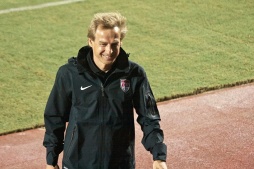
Jurgen Klinsmann
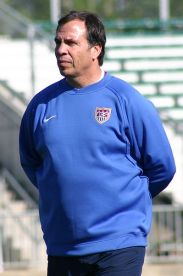
Klinsmann has the second-highest winning percentage of any U.S. manager, trailing only Bruce Arean. (Wikimedia Commons)

Jurgen Klinsmann– Klinsmann was the head coach at the start of this 2018 WCQ cycle before he was fired for losing the first two games of qualifying. One game was home to Mexico, while the other was away to Costa Rica; neither of those games are easy games but losing both of them was unacceptable. Plus, there were plenty of problems on this team before those two losses.

I personally disliked many of Klinsmann’s quirks, but let me focus on things which affected this qualifying cycle. He believed in creating competition at every position. In an attempt to produce that ideal, he gave many different players minutes at crucial positions. What this caused was an overall lack of consistency, and lack of chemistry. Before the 2016 Copa America, John Brooks and Geoff Cameron had barely played together as a center-back pairing with Michael Bradley in front of them as a defensive midfielder. That was a foundational piece of the team at that tournament. Years of this little consistency gave Bruce Arena less to work with when he took over at the beginning of 2017.

There were also a number of players who Jurgen inexplicably would not call up to the national team. Jorge Villafana, Dax McCarty, Benny Feilhaber, and Sacha Kljestan (to name a few) could each have had another 20+ caps under their belts throughout this cycle if they were called up when they should have been. Meanwhile the likes of Julian Greene, Michael Orozco, and Mix Diskerud consistently received call-ups and panned out into next to nothing. When Arena took over, he brought in a few of these shunned players but they had to quickly acclimate to team.

Both of the above issues, lack of consistency and exclusion of useful players, may not seem super important but I firmly believe that both of them eroded the maximum potential of the core players on this USMNT.

399px-brucearena_20060410
Bruce Arena managed the U.S. at the 2002 and 2006 World Cups, but missed qualification in 2018. (Wikimedia Commons)

Bruce Arena– He was brought in to steady the ship and ensure that the US would qualify for the World Cup. He failed. To be fair, as mentioned above, Arena was handed some tough cards to play with; two games played and both were losses. He had to get the results of ten games in eight games. As difficult asthe job was, it was not impossible.
Up until September, we looked good. We were undefeated and it looked like we would be fine. The loss to Costa Rica in September was tough to swallow but not damning. The US could survive that. We could not survive a loss to Trinidad & Tobago (T&T). Playing a line-up on short rest, in poor conditions, in a practically must-win game turned out to be pretty costly. Oddly, this was uncharacteristic of Arena. He rotated his squad between the home and away games of every other international break so far. I think he owns a lot of the blame for the loss to T&T and that loss is ultimately what eliminated the US. At the very least, in post-game interviews he owned that responsibility. I think people have been putting more blame on Arena than anyone else. That’s probably fair, but he’s not the only one to be blamed.

Sunil Gulati (I honestly forgot about this guy)- Gulati is the president of US Soccer Federation (USSF) and appointed both Jurgen and Bruce. First, it is strange for a national team head coach to last more than one World Cup cycle. Despite that, Sunil Gulati re-signed Klinsmann before the 2014 World Cup draw of pools even occurred. Then to keep him on after losing the 2015 Gold Cup in the semi-finals to Jamaica, and missing out on the 2017 Confederations Cup only to fire him after losing two WCQ matches really put the US in a pickle. Had Klinsmann been fired earlier, or not re-signed in the first place, the national team could have sailed a straighter course.

Then, picking Bruce Arena as a stop-gap seemed like the most logical choice at the time. And it probably was the best choice given the tough scenario. But Sunil Gulati put himself in that difficult position by waiting so long to fire Klinsmann. You reap what you sow.

The Players– As important as the above is, the team’s fate was decided on the field. And to be honest, it looked like the US were playing a preseason friendly for most of the final game that solidified their elimination. They knew what was at stake, and yet there was a decided lack of urgency to the team from the start. Despite this being the most talented and skilled USMNT ever, Alexi Lalas was right when he said that the US players were missing the grit of the old national teams. I still standby this sentiment.

Others– I will not entertain any arguments that US players playing in MLS is to blame for this. Even if it does own some level of blame in an indirect way it is negligible compared to what is stated above. In fact, besides Mexico, every other team in CONCACAF have a substantial number of national team players playing in MLS. If anything, MLS made the US’s qualifying more difficult because it has boosted programs like Panama and Honduras, not because it has deteriorated the play of American players.

800px-pulisic170727-2
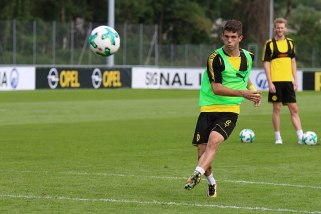
Christian Pulisic is the face of the youth movement giving hope to fans of U.S. men’s soccer. (Wikimedia Commons)

Conversely, I understand the desire to use the US academy system as a scapegoat. However, players “in their prime” are the players who should have carried this team to the World Cup. Those are players ages 23 – 28ish. Those players did not show up as much as we needed them to and so we had to rely on the old-guard (Dempsey and Howard). But those “in their prime” players were in US academies approximately 10 years ago. If you believe that the US academy system has not changed since Matt Besler, Omar Gonzalez, Michael Bradley and Jozy Altidore came out of it you are sorely mistaken. The youngsters like Tyler Adams, Weston McKennie, Erik Palmer-Brown, Andrew Carleton, etc. are of a different breed of USMNT player. I am not saying that the US academy system is perfect, but it is improving and will continue to improve as time goes on.

Lastly, I will admit that I am not old enough to know this, but it feels like there are more young talented players coming out of the US than ever before. The key then, is continuing to develop those players once they join the senior team and mold them into a cohesive unit. That will be the job of the next head coach. Speaking of which …

THE PRESENT: What are the immediate next steps for US Soccer?

Changes- I would not be surprised if Bruce Arena resigns before this article is even posted online (He did). Sunil Gulati will almost certainly be out of a job as well but I do not know whether that will be of his own accord, or how quickly that will occur. USSF will definitely need to find replacements for them, but that process needs to be well thought-out, which may take some time. Plus, as much as it may not feel like it, USSF has some time, especially for the head coach position. Many head coaches looking to coach a national team may not be available until after the World Cup next summer.

USSF PresidentCarlos Cordeiro won the USSF election in Febuary. My prior speculation on this isn’t really interesting now. Jury is still out on whether Cordeiro was the right choice.

Head Coach- For the head coaching job, that will depend a lot on who is available and what the new USSF President wants. I think they will be looking for someone 1. Who is familiar with the US system/MLS 2. With national team coaching experience 3. Who has a record of developing youth. As of right now, Tata Martino of Atlanta United checks all of those boxes. Other candidates who check some of them are Peter Vermes of Sporting Kansas City, and Oscar Pareja of FC Dallas. Still, all of those names are within MLS. It is very possible that USSF look far and wide for the next head coach. A dark horse candidate that no one is talking about because he is relatively unproven is Patrick Viera (formerly) of NYCFC. He has done a very good job of getting the most out of his youth (see: Jack Harrison recently playing for the English U-21s)

For now, Dave Sarachan is the interim Head Coach. He’s done fine for an interim head coach. Since the end of the spring I’ve been rooting for Gregg Berhalter to win the position. I plan on writing a whole different column about that next week. Stay tuned.

THE FUTURE: What does the USMNT have to do to get back on track?

Owning CONCACAF- I think Matt Doyle phrased it well on “Club & Country: After the Whistle” when he said that the US needs to “start beating up on CONCACAF teams again”. The US need to be the best team on this continent before we can do anything major on the world stage. Don Garber, MLS Commissioner, has expressed similar sentiments about MLS. MLS needs to be the best league in CONCACAF before it can be compared to other leagues around the world. This is a natural progression for the league to take, and I agree with the Armchair Analyst himself that it is a progression for the US as well. (If you’re interested in soccer in the US, then Matt Doyle is a must-read)

Integrating Youth- In addition to re-becoming the shark which eats CONCACAF minnows, the US have to get better at incorporating youth into the national team. This is a separate process from developing youth in our academies. I am referring to making the leap from our youth teams to our full senior national team. For example, Matt Miazga is 22 (now 23) years old and starting in the Dutch League. Yet the most action he has seen for the senior team was one Gold Cup appearance this summer and some other cameos. At this point, he should be somewhat integrated into our center back rotation. I think Bobby Wood also integrated slowly onto this team. At this point he is in the rotation at striker but it feels like it came a year or two too late.

Dave Sarachan has laid a great foundation for this in recent friendlies. The rise of Tyler Adams, Weston McKennie, et al. bodes well for the USMNT.

Clint_Dempsey
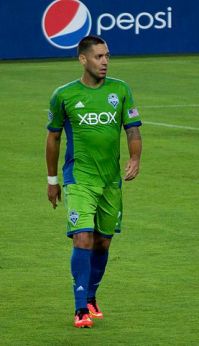
Clint Dempsey retired from international soccer in 2018, finishing his career third in caps and tied first in scoring. (Wikimedia Commons)

Saying Goodbye- Part of our problem with integrating youth is that we struggle to move on from older players. This problem will likely evaporate for a year or two as our oldest players retire (Thanks Clint Dempsey!).

With that, we have to say goodbye to some USMNT legends once and for all. Clint Dempsey, Tim Howard, and DeMarcus Beasley will never play a competitive match again for the USMNT. These guys won’t see more than one or two more caps as celebrations of their careers (Clint didn’t even get that).

Additionally, say goodbye to the roles of players aged 27-30 on this team. Michael Bradley will be on the cusp of 35 by the time the 2022 World Cup rolls around. The young end of this cohort include Jozy Altidore and Darlington Nagbe who will be 31 in 2022, but also include Gonzalez and Besler who will both be 34 by then. I do not expect the US to abandon these players completely. However, when do we let go of players of this age group? I have a feeling the 2019 Gold Cup may be the last hurrah for many of them.

Seeing how well Miazga and Brooks paired together in recent friendlies, I do not see a reason to call any older center-backs. I still think Jozy and Nagbe could be useful for this team, especially over the next two years. After that I really hope some youth beat them out for their positions. After recent reports of Bradley’s ‘alpha dog’ mentality, I honestly think his presence will only be a hindrance.

Looking Forward- And with that I will leave everyone with some hope that it will get better from here. Christian Pulisic, the wonder-boy himself, the most talented player is US history, is only 20 years old. He played in that elimination game and you can bet he will never forget it. The most expensive player is US history (who was injured for the last few qualifiers), John Brooks, is 25 years old. The US U-20 team made it to the quarterfinals of the U-20 World Cup this summer without Pulisic and Shalke midfielder Weston McKennie and other notable absences. Their only loss was to the team that ended up getting second place. 19 year old Tyler Adams scored his first USMNT goal against Mexico. The future is bright.

After another year, I have some idea on who should be key players going forward. At this point, I would definitely put Pulisic, Adams, McKennie, Brooks, Miazga, Yedlin, and Steffen on the field for a must win game. The other four starting positions are still up for grabs, which is fine for now. Our next competitive game is in the summer of 2019 and it’s the Gold Cup. Don’t get me wrong, I want to win the Gold Cup, but if we’re still working out a kink or two I won’t cry about it.

But I’m getting ahead of myself. Before we worry about that we should worry about who the head coach is going to be. Come back next week to hear my thoughts on the head coach search!

Behind Messi’s Decision

Make that three in a row for Argentina. After losing to Chile on Sunday, Argentina came up short in its third straight tournament final. The loss to Germany in the 2014 World Cup Final, followed by two consecutive defeats to the Chileans in the Copa America have left the Argentine with a sour taste in their mouth.

Lionel Messi
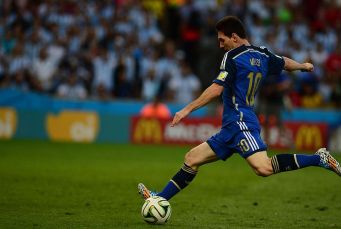
Messi is Argentina’s all-time leading scorer with 55 goals in 113 caps. (Wikimedia Commons)

So much so, that Argentinian captain Lionel Messi has said that he is retiring from international football. His proclamation came shortly after the heartbreaking loss, where Messi fired his shot over the bar during the decisive penalty shootout. It might have just been his emotions getting the best of him in the heat of the moment. But there are plenty of other reasons that could be fueling Messi’s desire leave the international game.

First and foremost, it is no secret that he has a certain amount of disdain for the Argentina Football Association (AFA). For anyone who has consistently read this blog, you know I hate FIFA for being a corrupt organization. The AFA fits into that same mold.

For some context, the Argentinian players beat the USA last Tuesday, and then were set to fly out to Houston on Thursday. However, the flight was delayed due to weather concerns. That didn’t stop Messi from taking to social media to bash the AFA for the mishandling of the situation. The AFA issued a response saying that Copa America organizers were responsible for all travel logistics. I think Messi was just looking for something to be mad about here, but he was probably already a bit pissed off.

Just prior to the flight snafu, AFA president Luis Segura was charged with fraudulent administration regarding television-broadcasting rights. He hasn’t been found guilty, but the money in question is several million dollars over the course of the last six years. That reflects poorly on the AFA and likely already had Messi in a bad mood.

There is also a deep-seeded stalemate between those in Argentina and their most prolific player. Messi has played for Barcelona his entire career and that has led to the sentiment that he is more committed to his club than his country. It has been a long-standing love-hate relationship between Messi and the Argentine fans.

From their perspective, he has never delivered. Sunday’s loss was the fourth time Messi came up short in a major tournament final. He has only ever won one gold medal and it was at the Olympics, which is rather insignificant by world football standards.

Lionel_Messi
Argentina has not won a major tournament since 1993, when Messi was only six. (Wikimedia Commons)

However, it is hard to argue that Messi hasn’t given it his all while wearing an Argentina shirt. He was nothing short of magical in this Copa America run, tallying five goals and four assists during the team’s six games. He didn’t start all of them either, as he came off the bench early in the tournament. Think back to the 2015 Copa America, where Messi scored only once, but had three assists and was the only Argentine player to score in the Finals’ shootout. And before that, it was four goals and an assist en route to the Golden Ball Award at the World Cup in 2014.

The last three years have been some of the best of Messi’s career at the international level. He has guided Argentina to three consecutive major tournament finals, coming up short to Chile and Germany, both of whom are great teams.

The reality is that Messi must feel jaded. I honestly do not think his retirement at this point is permanent. He is, after all, just 29 years old. There is still a lot of magic left in the tank for Messi. I think his teammates will convince him to give it at least one last run at the 2018 World Cup in Russia. If the five-time Ballon d’Or winner cannot pull through there, then I think that might be the end of the line. Until then, just enjoy the show everyone.

One Rule Soccer Must Change

The deliberate handball. One of the dirtiest plays in all of sports and probably the dirtiest one in soccer. Yet players get off with a minimal punishment considering how much of a game-changer it can be.

This might seem like odd timing. Nothing happened recently in soccer that sparked this conversation. This is actually as a result of an argument I had with a buddy of mine recently about how one of the most controversial rules of soccer works.

Asamoah Gyan
Gyan finished the tournament with three goals but could not find a fourth to put Ghana through to the semi final.

For anyone looking for an example of what I mean, here is a perfect one. At the 2010 World Cup in South Africa, Uruguay met Ghana in the quarterfinal round. The game was tied and it was late into the second half. Ghana put together an attacking move that led to a shot that rebounded off the keeper. Another shot was blocked by an outfield defender and the ball careened into the air. One of Ghana’s players got their head to it and directed it towards goal. Luis Suarez, who was standing on the goal line, blatantly blocked the ball using his forearm preventing a sure goal for the African side.

Suarez was given an immediate red card and was suspended for the ensuing match. Ghana was awarded a penalty, which Asamoah Gyan banged off the crossbar and over. Uruguay would go on to win the game on penalties and advance to the semi final round.

But there never should have been extra time or penalties. The game should have ended with Ghana in front 2-1. Ghana had essentially slotted home the winner until Suarez illegally prevented it from going in. The referee did what he was supposed to do, which is eject the player and award a penalty. Sure Ghana had more chances to score in extra time and during penalties but it should never have come to that.

However, that hardly seems fair. Ghana had a shot heading into the net that would have counted for a goal. They should have just been awarded the goal. Earning the penalty is nice, but then they still have to take a shot on goal again with the keeper prepared to defend it. Going from a goal scored to another shot on goal isn’t exactly an equal pay off.

I’m sure most people will say, “Well that’s just how it is.” I’m saying it shouldn’t be. Think about it from the standpoint of a basketball play. If a player is fouled in the act of shooting or before he even takes the shot but there was a clear path to the basket, they are awarded free throws. Their scoring opportunity was taken away and as a result, they have a chance to earn those points in a different way. They don’t just award the player the points though because there is still a possibility that he could have missed the ensuing shot even without the foul.

This is similar to in soccer when a player is taken down inside the penalty area. They are awarded a penalty. Logically, that makes sense, the defender committed a foul that prevented a goal-scoring opportunity for the offense and now they are given a chance to take another shot on goal from the penalty spot. Once again, it was not guaranteed to go in though, so the goal is not just given.

Going back to basketball, there is an instance in which a team is awarded a basket even if the ball does not make it through the netting. Goaltending is called when the ball is knocked out of the basket illegally. Rather than award free throws, the referee simple awards the points the shot was worth because it was already going into the basket when someone wrongfully interfered.

Luis Suarez
Suarez missed the semifinal loss against Netherlands.

Soccer does not have that. In the case of Suarez’s handball, Ghana was not awarded a goal despite the ball heading into the net. It is the exact same concept as goaltending in basketball, but it is called very differently.

That is just how the rules of the game work for soccer. It shouldn’t be though because it promotes cheating. Uruguay won that game because Suarez broke the rules. That should not be allowed. It tears down the very integrity of sports. It allows the cheaters to win because of the way the rules are written. They might be penalized, but in that instance, the cheating paid off. That should never be the case. A team that deliberately breaks the rules should be not be given a second chance to make up for the situation.

I think soccer should introduce a goaltending rule, similar to what happens in basketball. If an outfield player illegally prevents a ball with a clear path to the net if he is the only player in between the ball and the net, as it was in Suarez’s case, then a goal should be awarded. The ball was going into the net. There is no question about. It would have been a goal had it not been for an illegal play.

That rule would boost the integrity of the game of soccer. There would be no reason for players to deliberately block the ball with their hands to save a game because it would not save the game any more. The goal would still count and the player would still be ejected. It would not benefit his team in any way to make that play so players would stop making it. It is a logically change for FIFA to make.

New home for 2022 World Cup should be obvious

The FBI took down FIFA, the US Men’s team shocked the Netherlands in an international friendly and US Women’s team landed in Canada for the 2015 World Cup. It’s been a good week for soccer in the United States. It could get even better than that too if the FBI finds that the bid allocations that FIFA gave for the 2018 and 2022 World Cups were under the circumstances of a bribe or payoff. That would likely mean that both of the World Cups would be reallocated. 

Russia_2018_World_CupWhere exactly the tournaments would be reassigned is still up for debate. A reasonable case can be made for England hosting the 2018 edition because the preparation required is minimal. Sure scheduling might take a little while but the reality is that England is the soccer hub of the world at the domestic level. Britain has 12 stadiums that have a seating capacity of at least 38,000. It also has the historic Wembley Stadium, which would be an excellent site for a World Cup final if you ask me and seats 90,000 fans. The seating capacity is pretty comparable to what Brazil had last summer as well. On top of all of that, England hasn’t hosted a World Cup since 1966.

The reassigning of the 2022 edition is a little trickier. There were several nations that were in the mix and shockingly Qatar was selected. Beyond any tampering that might have gone on with the voting, Qatar shouldn’t be hosting the World Cup anyway. Summer temperatures can reach a startling 120 degrees Fahrenheit and in preparations for the tournament roughly 1,200 migrant workers have died. That number is sure to climb higher as well as we are seven years away from kickoff.

So it makes only too much sense to change the site of the 2022 World Cup. The question that remains is where would it be moved to. The logical answer here would be the nation that finished second in the voting, which was the US.

World Cup StampOn a lot of different levels, a move to America makes sense. From a monetary standpoint, the US would be the best option. The 1994 tournament held in the United States still ranks as the most lucrative one in history. You have to wonder a bit why FIFA would avoid returning to the US in favor of Qatar. Sure, FIFA officials might have been bribed but America would have generated infinitely more revenue for FIFA than Qatar could ever dream of.

There are plenty of critics who claim that soccer is not a big deal in the United States. However, the 1994 World Cup remains the most heavily attended tournament ever. Over the course of all 52 games played that year, the USA brought in over 3.5 million fans. The US still has the highest attendance average as well at roughly 69,000 fans per game. For some reference, the average attendance of a World Cup match if you remove the numbers from the year the US hosted is around 43,250 and the average in Brazil last year was only 53,600.

Preparations for the US wouldn’t be overly difficult either. They have more than enough stadiums to compensate all of the games that need to be played. I went through and found the top 12 stadiums that America could use as host fields. The Citrus Bowl, the Rose Bowl, Ohio Stadium, Bank of America Stadium, Lincoln Financial Field, LP Field, Sanford Stadium, University of Phoenix Stadium, Sports Authority Field at Mile High, the Cotton Bowl, Arrowhead Stadium and Soldier Field would all work well for hosting the 64-game schedule.

1280px-The_U.S._Embassy_in_Pretoria_Glows_at_NightThat would bring World Cup matches all over the country and let everyone enjoy the action. Florida, California, Ohio, North Carolina, Pennsylvania, Tennessee, Georgia, Arizona, Colorado, Texas, Missouri and Illinois would all have the opportunity to host a game. All of the fields use grass as the playing surface as well so there can be no complaints about the awful conditions of playing on FieldTurf. Travel might be slightly difficult but as long as there is as little coast-to-coast movement as possible, it should work out fine.

It also leaves a few options available for where the final could be played. It could once again return to the Rose Bowl, which is where it was played in 1994, or it could be hosted in Ohio Stadium, home of the Ohio State Buckeyes. What makes Ohio Stadium appealing is its capacity of 102,000 fans. The smallest stadium I selected was Soldier Field and that still has a capacity of 61,500. Based on the average attendance back in ’94, I don’t think there should be an issue with filling these stadiums.

At this point, it seems to be a matter of when not if regarding changes of location. FIFA is in turmoil right now and if the new brain trust that takes over has any hope of avoiding corruption being tagged to their name, they will start fresh. I might be a little bit biased in wanting the USA to be chosen as the 2022 host but the selection would make a ton of sense. It would be another step forward for the growth of soccer stateside. Hopefully, the US gets the chance to make it happen.