The best time of year on the sports calendar definitely delivered. With 48 NCAA tournament games played over the course of Sunday and Monday between the men’s and women’s divisions, there was no shortage of basketball action to watch. Hopefully, it made the start of your work week more tolerable. The men’s tournament has whittled its way down to 16 remaining teams and will take the rest of the week off. The women keep rolling on Tuesday with the round of 32.
I don’t know that anything could top what we saw over the first two days of the men’s tournament, but the past two days came pretty close. If you missed anything from the weekend or are just looking to catch up on the big storylines, let me catch you up on what we learned.
Best is yet to come in women’s bracket
After an incredibly boring first day of action, the women’s NCAA tournament started to heat up on Monday. Every single favored seed won on Sunday, with lower seeded teams going 16-0. Georgia Tech did pull off a stunning 17-point second-half comeback to beat upset-minded Stephen F. Austin in overtime. That was about the only real excitement we got on Day 1. Things changed in a big way on Day 2. 11-seed BYU knocked off No. 6 Rutgers for the first upset of the 2021 tournament. Belmont then stunned Gonzaga in a 5-12 seed upset. Wright State took it up a notch, beating 3-seed Arkansas to really shake up the bracket. The best game of the day though was probably the upset that didn’t happen. Troy came agonizingly close to being the first 15-seed to beat a 2-seed. Texas A&M got a little bit of help from the refs to secure its spot in the round of 32, ending what would have been an awesome Cinderella story. You can tell me what you think, but this looks like a backcourt violation to me.
We will get better matchups going forward. Michigan draws Tennessee on Tuesday. Iowa vs. Kentucky should also be thrilling. Could Syracuse possibly topple UConn without coach Geno Auriemma and starting guard Nika Muhl in doubt due to injury? It’s unlikely, but there should hopefully be a bit more intrigue as we move further along. Don’t just write off the division because we had a lackluster start to the proceedings. You never know when you might get an Arike Ogunbowale moment. That’s what makes it March Madness.
Chaos reigns in the men’s bracket
Speaking of 15 seeds, Oral Roberts continues its unlikely run, becoming just the second 15-seed to ever reach the Sweet 16. Max Abmus and company took down an SEC power this time in Florida and set up a date with another SEC school in Arkansas. While that is all wild and fun, it probably isn’t even the most shocking region in the field. Illinois fell to Loyola Chicago, Oregon State knocked off Oklahoma State and Syracuse toppled West Virginia. Rutgers also came very close to upsetting Houston, ultimately blowing an eight-point lead with four minutes to play. Still, the region is guaranteed to have either an 8-seed or a 12-seed in the Elite Eight. Plus, don’t rule out the Orange taking out the Cougars given how well Buddy Boeheim and company are shooting the rock. In total, there are four double-digit seeds in the Sweet 16.
We could still end up with a very chalky Final Four, but that’s looking less and less likely with every round. It seems like there are a few more upsets on the horizon and we could end up with a very high seed participating in the final weekend of the tournament.
Pac-12 does it again
In both divisions, the self-proclaimed Conference of Champions continues to excel. On the women’s side, that was expected. Pac-12 women’s teams went 6-1, with Washington State the only team to not make it out of the first round. The Cougars were also the only underdog, at least from a seeding perspective. It speaks to the dominance of the conference as a whole.
Meanwhile, the men’s Pac-12 teams are pulling off upsets left and right. I already mentioned Oregon State knocking out Oklahoma State. USC stormed past Kansas, handing the Jayhawks their worst loss in NCAA tournament history. Oregon dropped 95 points on Iowa to end the Hawkeyes’ title hopes. UCLA also cruised into the Sweet 16, taking care of Abilene Christian. Only Colorado came up short, getting blown out by Florida State. Ironically, Colorado was the highest men’s team from the conference this year. In a year where nothing makes sense, at least that still applies to basketball.
What’s wrong with the men from the Big Ten?
All season long, we heard about how great the Big Ten was. The conference was incredibly deep, evidenced by the eight teams from the conference to make the field, including two No. 1 seeds. After two rounds, only Michigan remains, and the Wolverines were definitely tested by LSU. Illinois suffered a shocking upset. Iowa got blitzed in transition by Oregon, despite Luka Garza scoring 36 points. Ohio State didn’t even reach the second round. After I panned the ACC for only having two teams left after the first round, it has more teams in the Sweet 16 than the Big Ten does. Maybe it was just fatigue after a long season of beating up on each other, but this has to go down as a disappointment for the conference after all of its regular-season success.
Why wasn’t Baylor a No. 1 seed again?
The defending champions in the women’s division narrowly missed being on the top line, instead settling for a No. 2 seed. After watching the Lady Bears drop 101 points on Jackson State while NC State struggled early against North Carolina A&T, it is fair to question if the committee got it right. Now, the Wolfpack did lose Kayla Jones to injury, but after one round, it certainly looks like the committee messed up. It happens all the time. On the men’s side, it is clear Loyola Chicago deserved better than a No. 8 seed. If it sounds like I am splitting hairs, consider this: Baylor has to go through UConn to reach the Final Four (assuming both teams make it that far.) NC State would draw Texas A&M, who nearly lost to Troy, if seeding holds the rest of the way. I don’t care how good you are, you would rather be playing Texas A&M with a trip to the Final Four on the line than UConn.
CBS gets creative with its graphics
March Madness has undoubtedly delivered on the hype, particularly after skipping a year, but I don’t think anyone could have anticipated this gem. Greg Gumbel’s face will no doubt be a meme for years to come. This clip has already made its rounds on social media, and I don’t think it will stop any time soon. What makes it even better, is that CBS doubled down and used these weird Mii adjacent dancers, this time supported by their television producers as backup dancers.
The Madness is clearly spreading. I apologize if you cannot unsee this.
Just stop checking your bracket
If you are like me, your bracket is likely toast by now. I picked Illinois to win it all in the men’s division and I picked all the wrong early-round upsets on the women’s side. Only two perfect brackets remain in ESPN’s Women’s Tournament Challenge. I honestly don’t know if anyone successfully predicted the 16 teams left in the men’s bracket. This seems like a good time to mention that ESPN has a Second Chance Bracket. No, it’s not nearly as fun, but I will never get tired of filling these things out.
The greatest time of year on the sports calendar is finally here. We have all waited a very long time to enjoy March Madness. At long last, our full days of meaningful basketball games have returned! The men’s NCAA tournament is off to a thrilling start and there is still plenty to come with the second round of action on Sunday and the women’s tournament getting underway. With the first 36 games in the books on the men’s side, let’s take a look at what we learned.
We really missed March Madness
Whether it was Oral Roberts stunning Ohio State, Ohio knocking out the defending champs, or complaining about our brackets being busted, it was so good to have the NCAA tournament back. Friday really spoiled us with tons of upsets and three overtime games. Saturday was a bit more tame early on, but we still had plenty to talk about with Virginia losing its first NCAA tournament game since the biggest upset ever against UMBC in 2018, VCU bowing out due to COVID-19 positive tests and Abilene Christian shocking Texas. To put it in perspective, my friend Akshat offers a very sobering comparison.
Needless to say, we all needed March Madness back in our lives. The second round of the men’s tournament starts Sunday, as does the first round of the women’s tournament. There are going to be an absurd number of basketball games on. Savor these moments. As we learned last year, we can’t take it for granted and before we know it, the season will be over and we will be without college basketball once again.
The NCAA still has a long way to go on gender equity
This should come as no surprise, but the women competing in San Antonio were not given the same treatment as their male counterparts in Indianapolis. While the men had a full weight room, the women had one weight rack with a few dumbbells. Thankfully, Oregon’s Sedona Prince was unwilling to stand for this.
The NCAA botched the whole situation. They issued all kinds of excuses and apologies, but that does not erase the very apparent issue. The NCAA does not have the best interests of women’s college sports at heart. I get that the men’s game makes more revenue, but for the governing body of college sports to not only allow, but play a hand in increasing the gap between men’s and women’s sports is disgusting. All signs point to Mark Emmert being unqualified to hold his position. Thankfully, athletes from the NBA, WNBA and men’s college hoops spoke up on social media and Prince’s tweet went viral. It made national news broadcasts across the country and reignited the conversation surrounding a lack of funding and respect for female college athletes. I won’t pretend that this fixes everything, but it is good to put the spotlight on the issue. And, as a result, the NCAA fixed the situation.
It is nice to see that these athletes can use their platform to advocate for themselves, but it is way past time for these things to stop happening. Hopefully, the NCAA actually learns something from this incident and addresses how they prioritize their athletes. I won’t be holding my breath though.
Cinderella is alive and well
Four teams seeded 13 or higher reached the Round of 32 for the first time in tournament history. No. 13 North Texas, No. 13 Ohio, No. 14 Abilene Christian and No. 15 Oral Roberts all booked spots in the second round in stunning fashion. In total, nine double-digit seeds made it through the first round. With Abilene Christian set to face No. 11 UCLA, we are guaranteed to have a double-digit seed in the Sweet 16. In a year unlike any other, there was bound to be upsets. I expected that. This level of chaos was not something I saw coming.
Could one of these teams truly be Cinderella and reach the Final Four? Recent history suggests that it is likely. From 2013 to 2018, a team seeded 7th or higher made it to the Final Four. No. 11 Loyola Chicago did in 2018. No. 7 South Carolina made it to the final weekend in 2017. No. 10 Syracuse stunned everyone with a semifinal appearance in 2016. No. 7 Michigan State reached the Final Four in 2015. No. 7 UConn beat No. 8 Kentucky in the National Championship game in 2014. What a wild year that was. No. 9 Wichita State made a semifinal run in 2013. It is far from a guarantee, but all signs point to another unforeseen team making a deep run.
If I had to pick one team from this year’s group, I am looking at UCLA. Michigan is not at full strength without Isaiah Livers. Alabama looked plenty mortal against Iona. Florida State and Colorado have high ceilings, but low floors. Mick Cronin’s group is my pick to play Cinderella this year after watching the first round.
Pac-12 came to play
Only one conference in men’s college hoops emerges from the first round undefeated. The Pac-12 went 5-0 as Colorado, USC, Oregon, UCLA and Oregon State all advanced to the round of 32. Now, that record has an asterisk because Oregon advanced without actually playing, but this is still incredibly impressive. Georgetown was a very trendy upset pick over Colorado, but the Buffaloes blew out the Hoyas by 23. In fact, all four teams that actually played won by double digits, which is just unheard of. None of these teams were seeded a five seed.
Now, the task gets much harder going forward. Florida State, Kansas, Iowa, Texas and Oklahoma State await, but after what we have seen so far, it would be a mistake to count this conference out. Remember this next year when you are making your bracket. It’s important to eliminate that East Coast bias.
ACC was as bad as we thought
Speaking of teams on the East Coast, the ACC was downright terrible. And this should not come as a shock. Despite having seven teams in the tournament field, this was a down year for the conference. Virginia and Florida State were the highest-seeded teams, landing on the four-seed line. Much has been made of Duke’s struggles, but they were far from the only blue blood to miss a step this year. UNC was incredibly inconsistent. Georgia Tech was too. Virginia Tech and Clemson faded down the stretch. Louisville, who arguably should’ve been in the field, had some ugly losses. The bottom of the conference was really bad as well. Miami, Notre Dame, Boston College, Pittsburgh and Wake Forest all finished with losing records. A 2-5 showing in the first round feels like a fair reflection. Syracuse and Florida State advance, but their opponents, West Virginia and Colorado respectively, could very well keep the ACC out of the Sweet 16 all together.
What home state advantage?
Purdue was the only school from the state of Indiana to go dancing his year. The Boilermakers earned a top-four seed and seemed poised for a potential Sweet 16 run playing in front of a largely pro-Purdue crowd. North Texas had other ideas. Until arenas are back to full capacity, it might be hard to count on location making much of a difference in the outcome of games. These limited capacity crowds are really fun. Grand Canyon students gave us some memorable moments, but it is clear crowd noise and energy is still not too much of a factor.
This time around, it is a bit more understandable why the Cavaliers were upset. The team was not able to practice all week due to COVID-19 protocols and the rust was clear on offense. UVa scored its fewest points of the season as they shot 35 percent from the field and 25.8 percent from behind the arc.
It is easy to forget, but Virginia was actually the defending champion, having won the tournament in 2019. That means UVa’s last loss in the NCAA tournament came in 2018, which just so happens to be the infamous UMBC game. Looking at how this all played out over the past three tournaments, I think the Cavaliers would do it all again if given the chance. Those first-round upsets sting, but those national championship banners hang in the rafters forever. (Well most of the time. Sorry, Louisville.)
Buddy Buckets is for real
For those wondering, Buddy Boeheim is more than just the coach’s son. In the month of March, Boeheim is averaging 26.7 points per game. He went off for 30 in Syracuse’s first-round win against San Diego State, including a torrid stretch where he scored 16 straight points. He is joined by Kevin Obanor of Oral Roberts and Miles McBride from West Virginia as the only players to reach the 30-point mark in the Round of 64 this year. Boeheim and McBride will face off on Sunday as well, so prepare for some major fireworks. As a Syracuse alum, I don’t think I could have written this column without mentioning Jim Boeheim’s youngest son.
Making a perfect bracket is impossible
We didn’t even get through the first round before everyone’s brackets were busted. ESPN and Bleacher Report both announced that no users on their site had a perfect bracket after Ohio upset Virginia and Maryland knocked off UConn. I didn’t even come close to making it that far. I had UNC facing Ohio State in the Elite Eight with the Buckeyes advancing to the Final Four. That didn’t quite pan out, with both teams suffering first-round losses. Texas was also in my Final Four. Trying to predict the outcome of 63 games is inherently difficult as it is. Add in the wild range of possible outcomes from college athletes and you have what makes the tournament so entertaining. The single-elimination format makes it truly unpredictable. So while your bracket may not be perfect, you can take solace in knowing that no one else managed to predict all these results either. And maybe now there is still hope you could win your bracket pool.
Follow the Aftermath via email to get every article delivered right to your inbox. Enter your email in the text box to subscribe. You can also follow us on Facebook and Twitter.
In an NFL offseason that has already produced plenty of fireworks, more are on the way as free agency looms large. Teams are working hard to create cap space after COVID-19 impacted league revenue streams and led to a sizable drop in the salary cap for the 2021 season. While the general buzz around the NFL is that top players will still see big-money deals, it is the next tier of players likely to get squeezed by the financial shortcomings for each franchise.
With the league’s legal tampering window opening Monday and free agency officially kicking off Wednesday, I decided to rank the top 25 free agents and work out a logical landing spot for each of them. Players who received the franchise tag were not included and this list is updated through Sunday night. There is still a possibility teams could announce a deal to bring back a player before they ever hit the open market, much like the Packers recently did with Aaron Jones.
Keep in mind, these are not necessarily predictions for where each player will land, rather a look at good fits for team and athlete to find success. I took into account each team’s cap space and the financial figures I reference throughout are pulled from Spotrac and updated through Sunday night. Without further ado, here are my top 25 free agents for the 2021 NFL offseason.
Barrett spent the first five years of his career in Denver.
1. Shaquil Barrett, EDGE, TB – Broncos Shaq Barrett proved he was much more than a one-season wonder. He did not come anywhere close to replicating his outrageous 19.5-sack 2019 season, but he racked up eight sacks in the regular season and four more in the playoffs. While the Buccaneers seem determined to keep him, a return to Denver could be in the cards. With Von Miller in flux and the Broncos needing a pass rusher to play across from Bradley Chubb, Barrett could be a logical fit. He fits the prototypical build of a 3-4 outside linebacker for Vic Fangio. With an estimated $32.6 in projected cap space, the Broncos will be able to make Barrett one of the top-paid edge players in the league. Editor’s note: Barrett has re-signed with the Buccaneers.
2. Trent Williams, OT, SF – Colts I expect San Francisco to make a big push to re-sign Trent Williams, but the Colts have $48 million in cap space after acquiring Carson Wentz and a major hole at left tackle with Anthony Costanzo’s retirement. Williams turns 33 in July, so he is not willing to wait around for a team to grow into a championship window. Indianapolis wants to run the ball and Williams is still one of the better run blocking tackles in the league. This would allow Chris Ballard to target an edge rusher or receiver in the draft while locking up a premier player at a huge position of need.
3. Yannick Ngakoue, EDGE, BAL – Bills There was plenty of buzz about Buffalo being a logical landing spot for J.J. Watt, but with the former Texan headed for the desert, the Bills should be in play for another top edge defender. While Buffalo does not have a ton of cap space, it can move on from John Brown and Mario Addison to free up some space. After a run to the AFC Championship game, I expect Brandon Beane to be active in looking for ways to improve the roster. Yannick Ngakoue is still one of the best defensive ends in football. He could play across from Jerry Hughes and eventually A.J. Epenesa. He has had at least eight sacks in each of his five seasons so far. This would be a slam dunk move for Buffalo.
4. Bud Dupree, EDGE, PIT – Falcons It took him a few years, but Bud Dupree is now the pass rusher the Steelers envisioned when they drafted him in the first round back in 2015. He has 19.5 sacks over his past 27 games, including eight in just 11 games in 2020. He was on pace for a monster season before suffering a season-ending ACL injury. Atlanta has been looking for an answer at pass rusher for years now. They have to resolve some cap issues, but Dupree could transform this defense. The Falcons also have the No. 4 pick to find a potential pass rusher to play across from him. New defensive coordinator Dean Pees is known for his ability to scheme pressure, which would only bode well for Dupree’s future success.
5. Kenny Golladay, WR, DET – Patriots With Chris Godwin and Allen Robinson both receiving the franchise tag, the top of the wide receiver market took a major hit. Golladay is clearly the best option available now. His 2020 season was cut short by injury, but he showed in 2019 that he can be a team’s top target. He had nearly 1,200 yards and 11 touchdowns in a Pro Bowl season. There is no team in the league that has a greater need at receiver than the New England Patriots. It just so happens, the Pats have roughly $65 million in cap space. Spending a chunk of that to grab a reliable outside receiver for Cam Newton, and whoever the quarterback of the future is, would be a great move to rejuvenate the offense.
6. Joe Thuney, G, NE – Jets Whether Sam Darnold is the quarterback in 2021 or not, the Jets need to improve the offensive line. New York finished in the top 10 in sacks allowed in 2020 and both of their starting guards, Alex Lewis and Greg Van Roten, can be released with little cap implications. It would actually open up more space for a franchise already projected to have just shy of $70 million in signing power. Targeting Joe Thuney would make a ton of sense to help bolster the interior of the line. He played the 2020 season on the franchise tag and Joe Douglas seems willing to spend money to build an offensive line. If Thuney is looking for a lucrative long-term deal, the Jets could be more than willing to give it to him.
7. Corey Linsley, C, GB – Ravens The Packers would love to bring back Corey Linsley, but Green Bay lacks a ton of cap space and could have more pressing needs. Elgton Jenkins played center in college and spent some time there this season when injuries cropped up. As a result, I could see Linsley finding his way to Baltimore to protect Lamar Jackson. The Ravens had issues at center all season long and Linsley would bring some much needed stability to the position. It does not solve all of Baltimore’s problems, but it would be a smart move to bolster their interior offensive line.
8. Mitchell Schwartz, OT, KC – Seahawks While there are certainly injury concerns here to monitor, Mitchell Schwartz is one of the best right tackles in football. He made All-Pro in 2018 and has been a large part of why the Chiefs have been so successful offensively in recent seasons. Just go back and rewatch the Super Bowl to understand the impact of not having him on the field. Meanwhile, in Seattle, Russell Wilson went public with his concerns over Seattle’s offensive line. With $21 million in cap space, and Schwartz possibly coming at a discount due to the injury, this could be a great move for the front office to show Wilson it is listening to him. Schwartz would be a massive upgrade over Brandon Shell.
9. Will Fuller, WR, HOU – Chargers Justin Herbert had a stunning rookie season and the Chargers seem poised for a jump in 2020. In order to see Herbert’s success continue, L.A. needs to surround him with talent at receiver. Will Fuller had a phenomenal year in his own right, but did get tagged with a PED suspension, which carries over to Week 1 in 2021. With Deshaun Watson intent on forcing his way out of Houston, Fuller should consider linking up with another young quarterback. Herbert has a strong arm and Fuller would give him a consistent deep threat that the offense lacked for much of the year. Herbert’s average depth of target was 24th in the league among qualified passers. Fuller would be a perfect complement across from Keenan Allen.
10. Jadeveon Clowney, EDGE, TEN – Cowboys Dallas’ defense was one of the worst in the NFL this past season. The Cowboys surrendered five yards per carry in 2020, the third-worst mark in the league. Tyrone Crawford is headed for free agency and the front office needs to devote some resources to reshaping the defense. A great move would be landing Jadeveon Clowney. He is not the elite pass rusher many hoped he would develop into, but the former No. 1 pick is an elite run defender. Playing across from DeMarcus Lawrence likely wouldn’t hurt either. Tennessee signed him to a one-year, $13 million deal in 2020. Another short-term, “prove it” deal could be in play for Clowney, especially after an injury-derailed season.
Lawson will be 26 at the start of the 2021 season and appears to have his best football ahead of him.
11. Carl Lawson, EDGE, CIN – Bengals On the surface, Carl Lawson’s numbers might not jump off the page. He had 5.5 sacks in 2020, his most since his rookie season in 2017. Dive a little deeper and you will see that Lawson had 44 pressures this past season, which was the fourth most in the NFL. One fewer than Aaron Donald and Joey Bosa. That grabs your attention. How about him leading the league in quarterback knockdowns with 27? Lawson is clearly a top-tier pass rusher, even if his sack numbers don’t show it yet. With a solid amount of cap space, the Bengals would be wise to bring him back. If he does hit the open market, expect the Jets, Patriots, Titans and Raiders to all be interested in securing his services.
12. Dalvin Tomlinson, DL, NYG – Jaguars I think the Giants will make a strong push to keep him, but without much cap space and other needs on the defense, there is a good chance they won’t be able to afford bringing Dalvin Tomlinson back. The former Alabama defensive tackle is the best interior run stopper in this free agent class. He has 15 tackles for loss over the past two seasons. Tomlinson chips in as a pass rusher as well, with 3.5 sacks in 2019 and 2020. Jacksonville’s run defense was horrendous this past season, allowing the third-most yards per game and sixth most yards per carry. Adding Tomlinson to plug up the middle would only increase the effectiveness of Josh Allen and K’Lavon Chaisson on the outside.
13. John Johnson, S, LAR – Raiders Safety has been a sore spot for the Raiders in recent years. Johnathan Abrams and Erik Harris struggled as starters in 2020 and Las Vegas does not have much in the way of proven depth behind them. John Johnson could be a reliable long-term answer. Outside of an injury-shortened 2019 season, Johnson has been a fixture for the Rams. He is a willing tackler and can more than hold his own in coverage. He is not the flashiest player available, but there is no question he would be a major upgrade over what the Raiders have been working with in previous seasons. Los Angeles will be sad to see him go, but is currently a projected $32 million over the cap.
14. JuJu Smith-Schuster, WR, PIT – Giants Is Daniel Jones a franchise quarterback? For now, the Giants are acting under the assumption that he is. In order to truly evaluate Jones, he needs more consistent talent around him. Sterling Shepard, Golden Tate and Evan Engram have all struggled with injuries over the past few seasons. Finding Jones a reliable target like JuJu Smith-Schuster could make a world of difference. While he has been able to repeat his incredible 2018 season, Smith-Schuster has become one of the best possession receivers in the NFL. Ben Roethlisberger actually had a slightly better passer rating this past season when targeting JuJu than he did in 2018. Finding a security blanket for Jones is a huge priority. Signing Smith-Schuster will be expensive, but probably not at the top of the receiver market.
15. Matt Judon, EDGE, BAL – Buccaneers If Shaquil Barrett leaves in free agency, bringing in Matt Judon would be a really solid consolation prize. He excelled in Baltimore’s blitz-happy defensive scheme, which should translate well to Todd Bowles’ blitz-happy scheme in Tampa. Judon would give the Buccaneers another productive pass rusher to lineup across from Jason Pierre-Paul and will probably cost a little bit less to sign than Barrett. He might not be quite as prolific, but with at least six sacks in each of his past four seasons, he would be a great chess piece for Bowles to unleash.
16. Trey Hendrickson, EDGE, NO – Lions Much like Leonard Floyd, Trey Hendrickson had a breakout 2020 season and had a position coach with his team take a head-coaching job elsewhere. Not only does Hendrickson have familiarity with Dan Campbell, he would fill a position of need for the Lions defense. Detroit has been desperately searching for an edge rusher for years. I don’t know that Hendrickson will be the answer to all their prayers, but he would represent a nice start to rebuilding Detroit’s defense.
Henry has struggled with injuries in his career, missing 25 of a possible 90 games since he entered the league in 2016.
17. Hunter Henry, TE, LAC – Chargers This move would mostly be about keeping some continuity around Justin Herbert. It is clear the reigning Rookie of the Year has talent, but with a new head coach and new system being installed, finding some familiarity for him to fall back on is important. Plus, Henry has quietly been a very productive tight end over the past two seasons. He still struggles with injuries, but he has mostly been available, posting back-to-back 600-yard seasons. He is not as sexy or talented as Travis Kelce or Darren Waller, but Henry gets the job done. With $51 million in cap space, the Chargers should have the room necessary to bring him back on a reasonable deal. Something in line with Austin Hooper’s four-year, $42 million deal from last season feels like a good template.
18. Romeo Okwara, EDGE, DET – Browns Cleveland desperately needs an edge rusher across from Myles Garrett. Romeo Okwara is coming off a 10-sack season and feels like a clean fit in the Browns’ 4-3 scheme. He would benefit from not being the center of attention as well, as he often had little help rushing the passer in Detroit. It is not as big a move as landing J.J. Watt or Shaquil Barrett, but Okwara would be a solid starter. This move would also free the front office up to target some help in the secondary or at linebacker in the NFL Draft.
19. Jonnu Smith, TE, TEN – Jaguars The Jaguars have not had good production at the tight end position since Marcedes Lewis left town, and that was in 2018. The presumption is Trevor Lawrence will be the new quarterback in Jacksonville and the Titans need to build out his supporting cast. With plenty of money to spend, Jonnu Smith would be a logical target. The Jags are plenty familiar with him having played against him for the past four years. He is a dominant presence in the red zone. He and Collin Johnson could be a problem for opposing defenses close to the goal line.
20. William Jackson, CB, CIN – Bengals Flying under the radar a bit, William Jackson is coming off a career year where he finally seemed to live up to his first-round pick status. He has steadily improved in coverage and should be one of the top corners available on the market. Quality cornerbacks are hard to come by as well. Cincinnati would be smart to bring him back before anyone else gets a chance to poach him. With over $44 million in cap space, the Bengals should have no problem finding the money to make a deal.
21. Anthony Harris, S, MIN – Browns With the offense mostly set in Cleveland, the Browns feel very close to being a win-now team. With a couple of savvy free agent additions to the defense, this team should be well-positioned to build off its 2020 success. Safety was a weak spot for the Browns this past year. Andrew Sendejo failed miserably while Ronnie Harrison felt like a band-aid solution. Grant Delpit also missed the whole year due to injury. Anthony Harris would help stabilize things. He did not have quite as strong of a season as he did in 2019, but he is still difficult to beat in coverage and has a nose for the football. With experience at both safety spots, he could start alongside Delpit or another draft pick and turn the position into a strength for the defense.
22. Leonard Floyd, EDGE, LAR – Chargers Sometimes, the NFL is very simple. Leonard Floyd had a breakout year in Los Angeles, racking up 10.5 sacks in his first year with the Rams. While Les Snead would undoubtedly love to bring him back, L.A. is a projected $32.1 million over the cap. So where will Floyd land? How about in the same city? His defensive coordinator just became the new head coach of the other team in town. The Chargers are in the market for someone to play across from Joey Bosa. Assuming that Brandon Staley brings his 3-4 system with him from the Rams, Floyd would be a logical fit in one of those outside linebacker spots.
23. Corey Davis, WR, TEN – Colts T.Y. Hilton is headed for free agency, as is Zach Pascal. Even so, the Colts still would need wide receiver help. Indianapolis already acquired one top-five selection this offseason, why not add another? Corey Davis broke out in a big way in 2020. He still has not lived up to his original draft slot, but posting nearly 1,000 yards receiving in 14 games is bound to earn him another contract somewhere. At 6’3″, he would give the Colts some much-needed size at the position and a potential big-play threat.
24. David Andrews, C, NE – Patriots New England seems set to let Joe Thuney walk after not franchise tagging him, but the Patriots must make some moves to keep its offensive line intact. They already brought back Trent Brown via trade on a restructured deal. After missing 2019 with blood clots in his lungs, David Andrews returned and played well in 2020. New England has plenty of other question marks on offense. Bringing back Andrews prevents one more from popping up.
Sherman might not be the lockdown corner he used to be anymore, but he can still hold his own as a starter in the NFL.
25. Richard Sherman, CB, SF – Raiders While many predict Richard Sherman will follow Robert Saleh to New York, I think he could stay a little closer to home. Sherman is from Compton, went to Stanford and has spent his entire NFL career in Seattle or San Francisco. I’m not saying he couldn’t switch coasts, but I think he would be very happy to stick in the Pacific time zone. Las Vegas is also in desperate need of corner help. The Raiders have to make a few moves to open up some cap space, but signing Sherman to a modest deal should be feasible. Add in that Las Vegas’ new defensive coordinator is Gus Bradley, architect of the Legion of Boom, and I think this is a perfect fit.
Every year, people love to read redrafts and draft grades for draft class before we have really had time to evaluate them. I have been guilty of this as well, but in recent years, I have waited until we hit the five year mark before dishing out draft grades and looking to do redrafts. It takes at least that long to evaluate a draft class. And, as you can see by the 2012 redraft I did back in 2016, five years isn’t always enough. Still, I can’t stay away and I really enjoy looking back on what could have been. Especially with a draft class like this one!
There are a few things I want to clarify before I jump in. I undid every trade that happened on draft day. With the benefit of hindsight, it is much easier to say every team would have just stayed put and taken the best player available. One other thing I want to point out is that just because a team selected a player at a given position does not mean they have to draft the same position. For example, the Jaguars selected Justin Blackmon back in 2012. They are not bound to taking the best receiver from the class (T.Y. Hilton) just because he plays the same position. Hilton was a good player, but there are plenty of other needs Jacksonville could have filled instead. I tried my best to go with the best player available given the roster composition of that team in 2012.
With all of that in mind, let’s revisit this famous 2012 draft class featuring some future Hall of Famers and a number of notable busts.
1. Indianapolis Colts Original selection: Andrew Luck, QB, Stanford Redraft pick: Russell Wilson, QB, Wisconsin Andrew Luck was widely viewed as the best college quarterback prospect to come out since Peyton Manning. He had his moments during an injury-riddled career, but Russell Wilson’s continued excellence makes him the clear choice in this redraft. Wilson has a Super Bowl ring, seven Pro Bowl appearances and a fantastic touchdown-to-interception ratio is his career. He earned MVP buzz early in 2020 and continues to play like a top-five quarterback every season. Wilson’s mobility and penchant for making off-schedule throws would work well for the Colts, who struggled to protect Luck throughout the early portion of his career.
2. Washington Original selection: Robert Griffin III, QB, Baylor Redraft selection: Andrew Luck, QB, Stanford Luck’s fall is a short one. Even though he only lasted five full seasons as a starting quarterback, he led the Colts to several playoff appearances and showcased elite arm talent in the process. In each of the four seasons that Luck played all 16 games, Indianapolis reached the playoffs. Perhaps Luck would have fared better in Washington with Trent Williams protecting his blindside. Robert Griffin III had a great rookie season and might have been a solid NFL starter if injuries had not derailed his career. Despite Luck’s own injuries, he offers an upgrade over RGIII.
3. Minnesota Vikings Original selection: Matt Kalil, OT, USC Redraft selection: Luke Kuechly, LB, Boston College Minnesota traded down one pick on draft night back in 2012 and took Matt Kalil. Kalil was serviceable as a starter in the NFL, even reaching the Pro Bowl as a rookie in 2012. Unfortunately, he never built on that debut season. Meanwhile, Luke Kuechly went on to have a Hall of Fame career for the Panthers. He was an incredible tackler with impressive athleticism, which resulted in five first-team All-Pro selections and seven Pro Bowl appearances in eight seasons. Injuries cut his career short, but his leadership and production over those eight years make him worth the pick. Minnesota’s defense would have had a star to build around during those Christian Ponder years.
4. Cleveland Browns Original selection: Trent Richardson, RB, Alabama Redraft selection: Fletcher Cox, DL, Mississippi State This was one of the worst draft picks the Browns made during the 2010s, and that’s saying something. Trading up one spot to grab Trent Richardson proved to be a huge mistake, but give Cleveland some credit for cutting ties and recouping a first-round pick for Richardson a year later. With the benefit of hindsight, the Browns would have been much better off selecting Fletcher Cox. Cleveland started sixth-round Billy Wynn at defensive tackle in 2012. Cox would’ve been a massive upgrade. In his career, he has earned six Pro Bowl nods and an All-Pro selection. Cleveland’s defense would have looked very different with Cox and D’Qwell Jackson dominating the middle.
5. Tampa Bay Buccaneers Original selection: Mark Barron, S, Alabama Redraft pick: Bobby Wagner, LB, Utah State Mark Barron went on to have a lengthy career as a box safety and might have been a bit ahead of his time. The NFL in 2021 loves to find those hybrid types, but that movement was still in its earlier stages. At least the Buccaneers slid down two spots before selecting Barron. Instead, the Buccaneers could have grabbed one of the best tackling middle linebackers in NFL history. Bobby Wagner is still at the top of his game nearly 10 years later. He is one of just three players in this draft class to go to seven Pro Bowls. The other two are Russell Wilson and Luke Kuechly. Tampa was in need of a linebacker at this point, too, as they ended up landing Lavonte David in the second round. Filling a huge position of need with a future Hall of Famer feels like a slam dunk.
6. St. Louis Rams Original selection: Michael Brockers, DL, LSU Redraft pick: Stephon Gilmore, CB, South Carolina On draft day, the Rams traded back with the Cowboys and landed an extra second-round pick. It was a pretty good move. Dallas selected Morris Claiborne, who never really figured out how to play corner in the NFL. Meanwhile, St. Louis landed a solid interior lineman in Michael Brockers. Passing up on Stephon Gilmore just does not make sense in this redraft. Keep in mind that the Rams started second-round selection Janoris Jenkins at corner that year, so it was definitely a position of need. Gilmore is one of the best cover corners in football. He became the first corner since Charles Woodson to win Defensive Player of the Year in 2019. He can lock down half the field and is one of just five players in this draft class to be named first-team All-Pro more than once.
7. Jacksonville Jaguars Original selection: Justin Blackmon, WR, Oklahoma State Redraft pick: Chandler Jones, EDGE, Syracuse Justin Blackmon had all the talent in the world, but he only lasted until 2014 in the NFL due to off-the-field issues. To make matters worse, Jacksonville actually traded up two spots to get him. Without a star receiver available in this draft class, the Jaguars tag the best edge rusher in the class to boost their defense. Chandler Jones would be an immediate upgrade over Austen Lane or Jeremy Mincey, Jacksonville’s starting defensive ends at the time. With 97 career sacks, Canton feels well within reach for Jones by the time his career wraps up. His impact probably would not have ended the Jaguars suffering, but it would have given them a talented player at a crucial position to build around.
8. Miami Dolphins Original selection: Ryan Tannehill, QB, Texas A&M Redraft pick: Kirk Cousins, QB, Michigan State I struggled with this pick a lot. Ryan Tannehill has experienced an incredible resurgence with the Titans, but he struggled a lot for the Dolphins. You could argue that simply not hiring Adam Gase would have solved all of Tannehill’s problems, but I can also understand if fans are hesitant about taking Tannehill again. Believe it or not, Kirk Cousins actually has more touchdowns, fewer interceptions and a better career completion percentage than Tannehill. However, Cousins didn’t truly take over the starting job in Washington until 2015. Would he have been as successful in Miami where he would have needed to start sooner? It’s hard to tell, but there is a chance he would’ve offered better stability than Tannehill did.
9. Carolina Panthers Original selection: Luke Kuechly, LB, Boston College Redraft pick: Lavonte David, LB, Nebraska It’s tough to miss out on Luke Kuechly, but Lavonte David is a solid consolation prize. David has a nose for the football and actually leads this draft class in tackles, ahead of both Kuechly and Bobby Wagner. He has been incredibly reliable as well with just seven missed starts in nine seasons. He has not always received the same level of love as his draftmates with one Pro Bowl selection and one first-team All-Pro honor, but he is still paying dividends for the Buccaneers in 2021. He was a major part of the team’s success in the Super Bowl for his ability in pass coverage. As a bonus for the Panthers, he would no longer be suiting up for their division rival.
10. Buffalo Bills Original selection: Stephon Gilmore, CB, South Carolina Redraft pick: Josh Norman, CB, Coastal Carolina While he has had some rocky moments, at his peak, Josh Norman was one of the best corners in football. While he is definitely a step down from Stephon Gilmore, this is not a bad consolation prize for the Bills. Norman proved in 2020, actually playing for the Bills, that he is still a serviceable corner capable of starting in the NFL. Considering that Buffalo eventually let Gilmore walk in free agency anyway, maybe they would’ve done more to keep Norman around.
11. Kansas City Chiefs Original selection: Dontari Poe, DL, Memphis Redraft pick: Ryan Tannehill, QB, Texas A&M Dontari Poe has had himself a solid NFL career, but Kansas City cannot pass up on a chance to find a long-term solution at quarterback. Matt Cassell would be gone after the 2012 season and had not done much in 2011 to indicate he deserved to be the unquestioned starter. As we discussed before when debating Tannehill vs. Cousins, Tannehill has really taken off over the past two seasons. Perhaps a chance to work with Andy Reid, who arrived in 2013, would have jumpstarted the version of Tannehill we have seen in Tennessee a few years earlier. Either way, he would’ve given the Chiefs a much better plan going forward at quarterback.
12. Seattle Seahawks Original selection: Bruce Irvin, EDGE, West Virginia Redraft pick: Mitchell Schwartz, OT, California Seattle really loses out big time in this redraft. Russell Wilson and Bobby Wagner are both off the board. The team is also set to go forward with Matt Flynn at quarterback with the next best option available in this draft being Nick Foles. The Seahawks traded down a couple spots on draft day and took Bruce Irvin. Irvin has actually had some bright spots, but he has never quite lived up to this draft slot. Mitchell Schwartz would give Seattle a pair of talented young tackles to bookend their offensive line. Schwartz has spent nine seasons as a quality starting right tackle for the Browns and Chiefs including an All-Pro nod in 2018. He did not miss a game prior to the 2020 season. There are few players as reliable and unheralded as Schwartz has been.
13. Arizona Cardinals Original selection: Michael Floyd, WR, Notre Dame Redraft pick: T.Y. Hilton, WR, Florida International Pretty much Arizona’s entire offense needed an upgrade outside of Larry Fitzgerald heading into the 2012 season. Michael Floyd had his moments, but he only managed 25 touchdowns in his career. Arizona needed a receiver, and T.Y. Hilton would have been a great addition across from Fitzgerald. Hilton has struggled with some injuries in recent years, but he has five 1,000-yard seasons, including 2016, when he led the league in receiving yards.
14. Dallas Cowboys Original selection: Morris Claiborne, CB, LSU Redraft pick: Harrison Smith, S, Notre Dame Back in 2012, Dallas traded up to select Morris Claiborne. While the Cowboys were right to focus on rebuilding their defense, Claiborne turned out to be a terrible fit. Meanwhile, Harrison Smith is a five-time Pro Bowler with the most interceptions of any player in this draft class. You could make the argument that he was one of, if not the best safety in the league over a solid stretch. He would be a much-needed playmaker in that Cowboys secondary and provide a clear succession plan to Gerald Sensabaugh, whom Dallas cut following the 2012 season before he ultimately retired.
15. Philadelphia Eagles Original selection: Fletcher Cox, DL, Mississippi State Redraft pick: Brandon Brooks, G, Miami (Ohio) Philly misses out on Fletcher Cox this time around, but they land a player who has been integral to their success in recent years. Brandon Brooks was selected in the third round back in 2012, but there is no way he lasts that long this time around. He was a decent player in Houston from 2012 to 2015, but really found his footing with the Eagles. He made three straight Pro Bowls and played a huge part in Philadelphia’s Super Bowl run in 2017.
16. New York Jets Original selection: Quinton Coples, EDGE, UNC Redraft pick: David DeCastro, G, Stanford There are only a handful of players from this draft class who have been named first-team All-Pro more than once. David DeCastro has been a staple of the Steelers offensive line for close to a decade. New York made back-to-back AFC Championship Games in 2009 and 2010 behind an incredible offensive line. DeCastro would be an upgrade over Matt Slauson, or a potential successor to Brandon Moore. This would be a great value, especially instead of Quinton Coples, who was out of the league by 2015.
17. Cincinnati Bengals via Oakland Raiders Original selection: Dre Kirkpatrick, CB, Alabama Redraft pick: Janoris Jenkins, CB, North Alabama It turns out the Bengals drafted a player at the right position from the right state, just the wrong school. Dre Kirkpatrick took three years to win the starting job and once he did, he never really lived up to his draft spot. Meanwhile, Janoris Jenkins turned out to be a steal for the Rams in the second round. He started his career with a bang in 2012, leading the league with three defensive touchdowns. He reached his peak in 2016 with a Pro Bowl appearance for the Giants. Jenkins has a good track record for making plays with 26 career interceptions. He has had some rough moments for sure, but he turned out to be a much more valuable player than Kirkpatrick.
18. San Diego Chargers Original selection: Melvin Ingram, EDGE, South Carolina Redraft pick: Melvin Ingram, EDGE, South Carolina The then-San Diego Chargers were rewarded for their patience with Melvin Ingram. It took him a few years to get going after injuries derailed the early part of his career, but from 2015 to 2019, Ingram had at least seven sacks each season. He has been a crucial part of the Chargers defense in recent years playing across from Joey Bosa.
19. Chicago Bears Original selection: Shea McClellin, EDGE, Boise State Redraft selection: Kevin Zeitler, G, Wisconsin Shea McClellin turned out to be a colossal bust for the Bears. He managed just 8.5 career sacks and was out of the league after 2016. I don’t think there is an edge player worth taking here, and Chicago’s offensive line could have used a boost. Chilo Rachal started eight games at left guard and the front office signed Matt Slauson to take over before 2013. Adding Kevin Zeitler would have been a much better solution at the position. Keep in mind this is also a year before the Bears drafted Kyle Long. Zeitler has started from Day 1, and his consistency and longevity make him well worth going in the first round again, this time, even earlier.
20. Tennessee Titans Original selection: Kendall Wright, WR, Baylor Redraft pick: Demario Davis, LB, Arkansas State It turned out to be a pretty rough receiver class with Michael Floyd, Kendall Wright and A.J. Jenkins falling well short of expectations. The next best receivers available after T.Y. Hilton would be either Alshon Jeffery or Marvin Jones, and while both have been solid, neither is worth going in the top 20. On the other hand, Demario Davis has turned into one of the best players from this draft class. His career has been a bit odd, with a one-year stint in Cleveland before returning to the Jets, but after years of solid play, he was recognized as a first-team All-Pro in 2019 with the Saints. He has over 900 career tackles and would have fit very nicely in the middle of the Titans defense. If that wasn’t enough, Davis has not missed a game in his nine-year NFL career.
21. Cincinnati Bengals Original selection: Kevin Zeitler, G, Wisconsin Redraft pick: Ben Jones, C, Georgia On draft day, the Patriots traded up to this spot to select Chandler Jones. With Jones long gone and trades not allowed in the redraft, Cincinnati stays put and grabs an interior lineman to protect a young Andy Dalton. With Zeitler gone, Ben Jones is the next best interior lineman available. It took a few years for the Texans to determine where his best spot was, starting at both guard spots before finally moving him to center in 2015. Since then, Jones has started every game and become a huge part of the Titans’ sometimes unstoppable run game.
22. Cleveland Browns via Atlanta Falcons Original selection: Brandon Weeden, QB, Oklahoma State Redraft pick: Dont’a Hightower, LB, Alabama The absurd run on linebackers continues as Dont’a Hightower is now the fifth to come off the board in the first 22 picks. I don’t think I really need to explain why Brandon Weeden is not going here again. I know the Browns desperately needed a quarterback, but reaching for Nick Foles here or either Kirk Cousins or Ryan Tannehill at No. 4 over more talented and impactful defensive players is bad process. Hightower was a fixture for the Patriots defense before opting out in 2020. He has two Pro-Bowl selections to his name as well. Adding him and Fletcher Cox would have made this defense one of the most exciting units in the league alongside 23-year-old Joe Haden.
23. Detroit Lions Original selection: Riley Reiff, OT, Iowa Redraft pick: Olivier Vernon, EDGE, Miami Riley Reiff was a fine player for the Lions. He played out his rookie contract in Detroit and has been a starter for the Vikings in recent years. However, Reiff was not the starter in 2012, so the Lions could have waited another year or gone to free agency to find an eventual replacement to Jeff Bakus. Instead, adding Olivier Vernon to start across from Cliff Avril would have given the Lions an elite pass rushing tandem. He could take the year to learn from Kyle Vanden Bosch before launching a career that has accumulated 63.5 sacks, second only to Chandler Jones in this draft class. The only thing that holds Vernon back from going even earlier is his injury history. He hasn’t played a full season since 2016.
24. Pittsburgh Steelers Original selection: David DeCastro, G, Stanford Redraft pick: Damon Harrison, DT, William Penn Pittsburgh nailed its pick the first time around, but with David DeCastro gone, the Steelers must look elsewhere to build their roster. The defense was full of aging stars at the time, including 35-year-old Casey Hampton. Damon Harrison went undrafted back in 2012, but there is no way he makes it out of the first round in this mock draft. He was one of the best run defenders in the league from 2013 to 2017. He has bounced around in recent years, but he is still a quality rotation piece and short-yardage option. He would help soften the blow of missing out on DeCastro.
25. Denver Broncos Original selection: Derek Wolfe, DT, Cincinnati Redraft pick: Dontari Poe, DT, Memphis Denver actually traded back twice on draft night and took Derek Wolfe with the 36th overall pick. Instead, the Broncos will stand pat and take Dontari Poe. Poe would have been an instant starter collapsing the pocket with Von Miller and Elvis Dumervil on the outside. Poe is a space eater at 346 lbs. He made the Pro Bowl in back-to-back seasons in 2013 and 2014. He might not be a future Hall of Famer, but he has been a solid contributor since he stepped foot in the league and is still worthy of a late first-round selection.
26. Houston Texans Original selection: Whitney Mercilus, EDGE, Illinois Redraft pick: Whitney Mercilus, EDGE, Illinois There were only a few teams that not only took a quality player, but took in him in a realistic draft slot. Whitney Mercilus has been a solid contributor throughout his career. He has missed a decent amount of time due to injuries over the years, but his 54 career sacks and 68 tackles for loss speak for themselves. Taking him off this Texans’ defense would definitely be a detriment, even if he was not a perennial Pro Bowler.
27. New England Patriots via New Orleans Saints Original selection: Chandler Jones, EDGE, Syracuse Redraft pick: Michael Brockers, DL, LSU New England worked some magic on draft night back in 2012, trading up twice to land two solid contributors on defense. Both Chandler Jones and Dont’a Hightower are long gone by this stage. Brockers has somewhat quietly put together an impressive NFL career. He has not racked up accolades, but he has been a steady presence on the Rams defense since he was drafted. His career totals are not staggering with 28 sacks and 48 tackles for loss, but Brockers is one of just eight players from this draft class who has been a full-time starter every year of his career. As the saying goes, the best ability is availability.
28. Green Bay Packers Original selection: Nick Perry, EDGE, USC Redraft pick: Akiem Hicks, DL, Regina The run on defensive linemen and edge rushers continues. Green Bay hoped to find someone to play across from Clay Matthews in Nick Perry. He had a really good two-year stretch in 2016 and 2017 with 18 sacks. His career bizarrely ended after 2018 though and those two seasons are not enough to justify another first-round selection. Instead, Green Bay can grab Akiem Hicks to bolster its defensive line. Hicks was a decent player in New Orleans, but his career really took off after landing in Chicago in 2016. He peaked with a Pro Bowl appearance in 2018. His run stopping and disruptive playmaking would be greatly appreciated.
29. Baltimore Ravens Original selection: Courtney Upshaw, LB, Alabama Redraft pick: Kelechi Osemele, G, Iowa State Baltimore traded out of the first round back in 2012. This roster had very few holes as the Ravens would go on to win the Super Bowl that season. If there was a weak spot, it would have been at right tackle. Believe it or not, Kelechie Osemele started at right tackle during that Super Bowl run. He later found his spot as a starter at guard. That type of versatility is worth the investment, this time in the first round. Osemele was solid in Baltimore, but really found his stride in Oakland. He made back-to-back Pro Bowls and was named first-team All-Pro in 2016.
30. San Francisco 49ers Original selection: A.J. Jenkins, WR, Illinois Redraft pick: Alshon Jeffery, WR, South Carolina A.J. Jenkins lasted one season in San Francisco and just three in the NFL. Needless to say, this was a huge bust for the 49ers. Alshon Jeffery might have been the difference in the 49ers’ Super Bowl run. His huge frame and impressive catch radius would have made him a great red zone target. He reached the Pro Bowl in 2013 with 1,421 yards receiving. His career fell off a bit after a strong 2014 season. He has not topped 1,000 yards since then and has struggled to stay healthy, playing all 16 games just once since that point. Even if he eventually fell off, Jeffery’s short-term impact is well worth a late first-round selection.
31. New England Patriots Original selection: Dont’a Hightower, LB, Alabama Redraft pick: Vontaze Burfict, LB, Arizona State If there is a team that found success with players who ran into issues with the NFL or stirred up trouble in the locker room. I think Bill Belichick would be willing to take the talent that Vontaze Burfict brings to the table and deal with the suspensions later. He was a Pro Bowler in 2013 after leading in the league in tackles. There is a good chance he would have become a bit more disciplined playing in New England. Even still, the short-term investment is worth it for the Patriots.
32. New York Giants Original selection: David Wilson, RB, Virginia Tech Redraft pick: Casey Hayward, CB, Vanderbilt The reigning Super Bowl champs went after a playmaker on offense, but there were no running backs that really deserved to go in the first round of this draft. Instead, New York can tab Casey Hayward to succeed Corey Webster. Even though the Giants drafted Prince Amukamara in the first round the year before, Hayward is too good a talent to pass up and this secondary would have benefited from a top cover corner. He burst out of the gate with six interceptions in his rookie season, but Hayward didn’t really become a full-time starter until 2016. This would be the perfect situation for him to develop into a starting caliber corner.
Welcome to the NFL offseason. The Buccaneers put a bow on the 2020 season by steamrolling the Chiefs 31-9 in a lopsided Super Bowl. Now, all 32 teams shift their focus to 2021. After a year like none we have ever seen before, we are heading for an offseason like none before.
There are at least a dozen teams that could make a change at quarterback. The NFL combine will not be taking place as usual either due to COVID-19 restrictions. On top of all of that, the salary cap is set to decrease by close to $15 million. This sets up one of the most interesting and pivotal offseasons in recent memory.
With tons of key players potentially switching teams, there is bound to be a lot of movement in these rankings before we get anywhere close to the start of the 2021 season. As it stands though, this is how each team stacks up following Super Bowl LV, as well as a quick look at each team’s biggest free agents.
1. Kansas City Chiefs 2020 record: 14-2 Key free agents: WR Sammy Watkins, CB Bashaud Breeland, CB Charvarius Ward, SS Daniel Sorenson, OLB Damien Wilson Even coming off a drubbing in the Super Bowl, no team is better positioned to make another run at the Super Bowl than the Chiefs. The core of the team is signed through at least 2021 and Kansas City’s front office has done well in recent years to find solid contributors in the draft. As long as Patrick Mahomes is healthy, it is going to be hard to pick against him and Andy Reid.
2. Tampa Bay Buccaneers 2020 record: 11-5 Key free agents: WR Chris Godwin, OLB Shaquille Barrett, LB Lavonte David, TE Rob Gronkowski, DT Ndamukong Suh, DT Rakeem Nunez-Roches, RB Leonard Fournette, WR Antonio Brown, K Ryan Succop Tampa Bay will not be going anywhere as long as they have Tom Brady. Yes, Brady will be 44 next season, but this team is built for success all across the roster. There are a number of critical free agents the team will need to lock up, but players like Gronk and AB are likely to stick around to keep chasing rings. There are probably a few other veterans around the league that would do the same thing. Call it the Brady effect, but this team is going to be a front runner to repeat.
3. Buffalo Bills 2020 record: 12-4 Key free agents: G Jon Feliciano, OT Darryl Williams, LB Matt Milano, CB Josh Norman, DE Trent Murphy, TE Tyler Kroft Make no mistake, the Bills are for real. Buffalo has the offensive firepower and defensive grit to be one of the best teams in the league in 2021. Without a ton of crucial free agents, the front office could get aggressive in pursuing another corner across from Tre’Davious White or a more reliable tight end. If Josh Allen can come anywhere close to repeating his performance next year, Buffalo will be back in the postseason.
4. Green Bay Packers 2020 record: 13-3 Key free agents: RB Aaron Jones, C Corey Lindsley, CB Kevin King, RB Jamaal Williams, WR Allen Lazard, TE Robert Tonyan, DE Montravius Adams Once again, the Packers found themselves on the doorstep of the Super Bowl, but could not break through. This team is still really close to putting it all together and finally getting Aaron Rodgers his second ring. Green Bay has some key offensive pieces to re-sign in Jones, Lazard, Lindsley and Tonyan, but this roster is pretty solid throughout. With the right additions at cornerback and along the offensive line, this team should be primed for another deep playoff run.
5. Baltimore Ravens 2020 record: 11-5 Key free agents: OLB Matt Judon, DE Yannick Ngakoue, OLB Tyus Bowser, C Matt Skura, RB Gus Edwards, WR Willie Snead It was a rocky start to the year, but what we saw from the Ravens in the second half of the season points to this team’s championship credentials. Baltimore has some clear holes to fill in the front seven on defense with Judon, Bowser and Ngakoue all out of a contract. The offensive line could use a boost and Baltimore is desperate for another receiver, but the foundation is still strong.
6. Cleveland Browns 2020 record: 11-5 Key free agents: OLB Olivier Vernon, SS Karl Joseph, DT Larry Ogunjobi, WR Rashad Higgins I am very bullish on the 2021 Browns. Cleveland has arguably the best offensive line in the league, a deep group of offensive playmakers and a solid front seven. The secondary should be a bit healthier this season, but the Browns also have enough cap space to make a signing or two to bolster the unit. Baker Mayfield does not need to be Superman for Cleveland to take the next step. If he can avoid turnovers, this team should be in the thick of the division title race.
7. Los Angeles Rams 2020 record: 10-6 Key free agents: C Austin Blythe, OLB Leonard Floyd, RB Malcolm Brown, CB Troy Hill, TE Gerald Everett, SS John Johnson, WR Josh Reynolds, LB Sam Ebukam Los Angeles created themselves a two-year window to go win a championship by acquiring Matthew Stafford. The Rams’ biggest obstacle to accomplishing that goal will be finding a way to supplement the roster with limited draft capital. L.A. is projected to be $25 million over the cap as of right now. They are likely going to lose a lot of their key role players. Stafford is not a mobile quarterback, so if the Rams cannot find a way to protect him, this is going to be a really ugly collapse.
8. Seattle Seahawks 2020 record: 12-4 Key free agents: LB K.J. Wright, RB Chris Carson, DE Bruce Irvin, G Mike Iupati, DT Poona Ford, LB Shaquem Griffin, CB Shaquill Griffin, G Ethan Pocic Seattle played two halves of a great season. The offensive was unstoppable in the first half while the defense looked helpless. In the second half, the offense ground to a halt while the defense found its stride. It all culminated in a disheartening first-round playoff loss. The Seahawks have some critical free agents to re-sign and a number of holes left to fill. Russell Wilson will give them a chance to be great, but the supporting cast is not ideal. Mike Iupati’s retirement is just another sign that this front office needs to invest in the offensive line. If the Texans have taught us anything, it’s that you need to keep your franchise quarterback happy.
9. Miami Dolphins 2020 record: 10-6 Key free agents: C Ted Karras, LB Elandon Roberts, DT Davon Godchaux, QB Ryan Fitzpatrick It all falls on Tua Tagovailoa now. With a solid amount of cap space, a few premium draft picks and a great coaching staff, Miami seems to have the foundation in place to be successful this year and beyond. The theme of this offseason will be finding Tagovailoa some help. Miami knows it needs to find a No. 1 receiver and to solidify the offensive line. Expect the team to be in the running back market as well. With a strong offseason, the Dolphins could definitely push themselves into the top five.
10. Tennessee Titans 2020 record: 11-5 Key free agents: WR Corey Davis, TE Jonnu Smith, DT Da’Quon Jones, OLB Jadeveon Clowney, LB Jayon Brown, K Stephen Gostkowski Tennessee could not take that next step forward after an AFC Championship run in 2019, but the Titans did well to avoid falling apart as well. It is clear the Titans have a formula that works. They just need to reinvest in the front seven on defense to get back on track. Jadeveon Clowney did not work out and you can bet the front office will be looking for some pass rushing help this offseason. Some really interesting free agent decisions exist too in Corey Davis and Jayon Brown.
11. San Francisco 49ers 2020 record: 6-10 Key free agents: OT Trent Williams, CB Richard Sherman, FB Kyle Juszczyk, DE Solomon Thomas, CB K’Waun Williams, RB Jerick McKinnon, FS Jaquiski Tartt, RB Tevin Coleman How does a 6-10 team that lost both its offensive and defensive coordinator end up 11th? Well when pretty much your entire roster is hurt and you still find ways to win football games, that inspires a lot of confidence for when you do get Nick Bosa and company back on the field. This is going to be a crucial offseason for the 49ers, who could be a player in the Deshaun Watson sweepstakes. Cutting Jimmy Garoppolo would get this team up to roughly $45 million in cap space, so big decisions lie ahead.
12. Arizona Cardinals 2020 record: 8-8 Key free agents: CB Patrick Peterson, WR Larry Fitzgerald, RB Kenyan Drake, G J.R. Sweezy, DT Corey Peters, OLB Markus Golden, OLB Hassan Reddick, OT Kelvin Beachum The future still seems bright in Arizona, even after a rough finish to the season. Kyler Murray is clearly the team’s franchise quarterback. The defense had some bright spots. This team is still a few key pieces away from truly contending and the front office has some tough decisions to make regarding Patrick Peterson and Larry Fitzgerald. Finding a new running back will be on the to-do list as well. This offseason is critical for the Cardinals.
13. Indianapolis Colts 2020 record: 11-5 Key free agents: DE Justin Houston, DE Denico Autry, WR T.Y. Hilton, S Malik Hooker, CB Xavier Rhodes, TE Trey Burton, RB Marlon Mack, WR Zach Pascal, QB Jacoby Brissett Not included in that list of free agents are Philip Rivers and Anthony Castonzo, both of whom retired. For the third straight year since Andrew Luck retired, the Colts do not have a plan at quarterback. Perhaps Jacob Eason is the answer, but it is hard to feel too strongly about a player who has yet to attempt an NFL pass. Meanwhile, Indy has a bunch of free agents at key positions on defense and several players close to needing extensions. Thankfully, the Colts have nearly $80 million in cap space to reshape this roster.
14. Pittsburgh Steelers 2020 record: 12-4 Key free agents: WR Juju Smith-Schuster, RB James Conner, OLB Bud Dupree, OT Alejandro Villanueva, DE Tyson Alualu, FS Sean Davis, LB Robert Spillane, CB Mike Hilton, OT Zach Banner Pittsburgh’s offensive line is in shambles and Ben Roethlisberger is mulling retirement. Big Ben will probably be back, but the Steelers are going to need to rework his contract to avoid a $41 million cap hit. This offense has a number of critical needs and the Steelers have limited cap space to work with. Maurkice Pouncey is gone as well after announcing his retirement. All eyes will be on the draft for Pittsburgh. Don’t be surprised if a couple of big-name players walk away in free agency.
15. New Orleans Saints 2020 record: 12-4 Key free agents: QB Jameis Winston, DT Sheldon Rankins, FS Marcus Williams, DE Trey Hendrickson, CB P.J. Williams, TE Jared Cook When you are $70 million over the cap and your future Hall of Fame quarterback is about to retire, you are in for a pretty steep drop. There is still plenty of talent on the roster, but New Orleans has a number of major question marks. With key players on defense headed for free agency and no cap space to re-sign them, the Saints could be headed for a rebuild. I think they will be aggressive in trying to stay competitive, but it is hard to see the path forward right now.
16. Dallas Cowboys 2020 record: 6-10 Key free agents: QB Dak Prescott, DE Tyrone Crawford, LB Sean Lee, C Joe Looney, OLB Aldon Smith, S Xavier Woods This ranking mostly stems from the belief that the Cowboys will bring back Prescott. Before his injury, Dak Prescott was putting up MVP-type numbers. Dallas’ offensive line was decimated by injuries as well and the defense crumbled. Still, with the offensive firepower at Prescott’s disposal and a number of key players returning from injury, this Cowboys team should be in the mix to win the NFC East.
17. Minnesota Vikings 2020 record: 7-9 Key free agents: FS Anthony Harris, DE Ifeadi Odenigbo, LB Eric Wilson, LB Todd Davis The Vikings have very few free agents to tend to. Anthony Harris and Ifeadi Odenigbo are quality starters, but Eric Wilson and Todd Davis were rotational players this year and could easily be allowed to walk. Minnesota’s defense needs a huge turn around in 2021 after a very disappointing 2020 season. There is room for improvement on the offensive line as well. This is a make-or-break year for Kirk Cousins and potentially Mike Zimmer.
18. Carolina Panthers 2020 record: 5-11 Key free agents: OT Russell Okung, G John Miller, RB Mike Davis, LB Tahir Whitehead, WR Curtis Samuel, OT Taylor Morton Reports have placed the Panthers in the middle of conversations for Matthew Stafford and Deshaun Watson. It is clear the front office feels it needs to upgrade at quarterback. With a young defense, there is a lot to like in Carolina. One major area for concern is the offensive line. Three of the team’s starting linemen are headed for free agency. Don’t be surprised if the Panthers spend some draft capital to rebuild their offensive front.
19. New England Patriots 2020 record: 7-9 Key free agents: QB Cam Newton, G Joe Thuney, CB Jason McCourty, RB James White, DT Lawrence Guy, C David Andrews, DE Adam Butler, RB Rex Burkhead, WR Damiere Byrd, CB J.C. Jackson, DE Deatrich Wise New England is primed for a makeover this season with tons of cap space, several key free agents and, potentially, a new quarterback on the way. The Patriots will have a bit more talent, specifically on defense, with several players likely to return after opting out of the 2020 season. Bill Belichick has his work cut out for him to overhaul this roster.
20. Los Angeles Chargers 2020 record: 7-9 Key free agents: OLB Melvin Ingram, TE Hunter Henry, C Mike Pouncey, LB Denzel Perryman, G Dan Feeney Los Angeles is headed in the right direction, but this team still has a long way to go before it is ready to compete for a title. The Chargers are breaking in a first-time head coach in Brandon Staley and have a patchwork offensive line. Mike Pouncey definitely won’t be back either after announcing his retirement. Justin Herbert gives this team a bright future, but there is still a ton of work ahead.
21. New York Giants 2020 record: 6-10 Key free agents: DT Leonard Williams, OT Cameron Fleming, DT Dalvin Tomlinson, WR Austin Mack, RB Dion Lewis, RB Wayne Gallman New York had some significant highs in 2020, taking the Bucs to the brink and beating the Seahawks in Seattle. Unfortunately, those were few and far between. Getting Saquon Barkley back will help this offense, but the team is still lacking playmakers. It seems like Joe Judge has reset the culture though and given the team a much brighter outlook. This defense is underrated and is capable of keeping New York in games.
22. Chicago Bears 2020 record: 8-8 Key free agents: WR Allen Robinson, QB Mitchell Trubisky, WR CordarrellePatterson, FS Tashaun Gipson, G Germain Ifedi, DE Mario Edwards Chicago has a big decision to make this offseason. Consensus seems to be that Trubisky is not the answer at quarterback, but the Bears are not well positioned to find his successor. With Robinson unlikely to return, and an uninspiring offensive line, this is not exactly a prime spot for free agents quarterbacks either. How the Bears answer their quarterback question is going to determine their outlook for 2021.
23. Washington 2020 record: 7-9 Key free agents: G Brandon Scherff, DE Ryan Kerrigan, CB Ronald Darby, QB Kyle Allen Washington’s defense is one of the best in the league. Now it needs to invest its resources in building an offense to match. Alex Smith is one of the league’s best comeback stories ever, but he is not the long-term answer at quarterback. He might not even be the short-term solution. With a sizable amount of cap space, Washington could get aggressive in finding some free agent additions, but everything hinges on the quarterback.
24. Las Vegas Raiders 2020 record: 8-8 Key free agents: DE Jonathan Hankins, DE Takkarist McKinley, WR Nelson Agholor, LB Raekwon McMillan, OLB Vic Beasley This franchise has been stuck in neutral for the past five years. Since a short-lived playoff run in 2016, the Raiders have been toiling away in obscurity and mediocrity. Derek Carr likely isn’t the answer at quarterback. Las Vegas’ defense is still one of the worst in the league. This team had it’s moment in the sun after stunning the division rival Chiefs, but it feels 8-8 is the ceiling given who the Raiders currently have on their roster.
25. Denver Broncos 2020 record: 5-11 Key free agents: OLB Von Miller, FS Justin Simmons, SS Kareem Jackson, DT Shelby Harris, WR Tim Patrick, A.J. Johnson, RB Phillip Lindsay Denver’ s offseason is going to be dictated largely by the decision the franchise makes at quarterback. There is some buzz about Deshaun Watson being interested in the Broncos. Drew Lock is still developing, but if the club is going to make a move like that, it would accelerate this team’s timeline significantly. They still have some key pieces on defense to lock up and a major decision looming regarding Von Miller. There is plenty of room for upward mobility.
26. Atlanta Falcons 2020 record: 4-12 Key free agents: C Alex Mack, RB Todd Gurley, SS Keanu Neal, S Damontae Kazee, DE Charles Harris, K Younghoe Koo Where in the world is this team headed? They still have Matt Ryan under contract through 2023 with a pretty easy out after 2021. The future of the club is going to be determined with what the Falcons decide to do with the fourth overall pick. Atlanta has a ton of options. They could find a successor to Ryan, pick their favorite non-QB prospect, or trade down and restock the roster. It is a tough call for new general manager Terry Fontenot.
27. Philadelphia Eagles 2020 record: 4-11-1 Key free agents: OT Jason Peters, WR DeSean Jackson, DE Vinny Curry, S Jalen Mills, RB Corey Clement, WR Greg Ward Carson Wentz is in Indianapolis. Zach Ertz is likely to follow. The Eagles are in salary cap hell and headed for something of a rebuild. Philly has an intriguing young quarterback to work with in Jalen Hurts, but there are question marks all over this roster. Not to mention, the Eagles have a first-time head coach who is a relative unknown. This team does not have the cap space to replenish this depleted roster right away. It is going to be two years before we see the Eagles competing in the NFC East again?
28. Cincinnati Bengals 2020 record: 4-11-1 Key free agents: CB William Jackson, WR A.J. Green, WR John Ross, DE Carl Lawson, DT Mike Daniels, K Randy Bullock, P Kevin Huber The key to this offseason will be protecting Joe Burrow. After the former Heisman winner spent much of 2020 running for his life, rebuilding the offensive line is the focal point. Expect the Bengals to be aggressive in the draft and free agency looking for ways to upgrade its current unit. Cincinnati has a few key free agents as well with William Jackson and Carl Lawson. There is a good chance that one of them departs, opening up another need on that Bengals defense. Cincy will need to stay patient, finding long-term solutions instead of short-team patches.
29. Houston Texans 2020 record: 4-12 Key free agents: DE J.J. Watt, WR Will Fuller, CB Gareon Conley,CB Vernon Hargreaves, DT P.J. Hall, DE Carlos Watkins Things look bleak in Houston. Franchise quarterback Deshaun Watson wants out. J.J. Watt is gone. The roster has holes at cornerback, edge rusher, running back and wide receiver, just to name a few. Under normal circumstances, the Texans could be well-positioned to land a top prospect to accelerate this rebuild. Instead, Houston does not have a pick in the first or second round. The organization maintains that it wants to keep Watson and rebuild his trust, but it is looking like this team might be headed for a long rebuild.
30. Jacksonville Jaguars 2020 record: 1-15 Key free agents: OT Cam Robinson, CB Tre Herndon, WR Dede Westbrook, WR Keelan Cole, WR Chris Conley, CB D.J. Hayden, TE Tyler Eifert, P Dustin Colquitt A new era is coming in Jacksonville. Urban Meyer takes over as head coach and presumptive No. 1 pick Trevor Lawrence will be the team’s new franchise quarterback. Things are definitely looking up, but the Jaguars have a lot of work to do still. Josh Allen and K’Lavon Chaisson offer exciting building blocks on defense, but the cupboard is pretty bare in the defensive playmaking department. Jacksonville’s secondary was one of the worst in the league in 2020. With a number of receivers headed for free agency, there is a clear need there as well. Lucky for the Jaguars, no one has more cap space this offseason, so Meyer and new general manager Trent Baalke will have every opportunity to reshape the roster.
31. New York Jets 2020 record: 2-14 Key free agents: FS Marcus Maye, WR Breshad Perriman, CB Brian Poole, LB Jordan Jenkins, S Bradley McDougald, CB Arthur Maulet, LB Tarell Basham The Adam Gase experiment ended with a resounding thud as the Jets played their way out of contention for the No. 1 pick. New York now has a huge decision to make about Sam Darnold’s future. It is very possible he is traded this offseason to make way for a new rookie quarterback selected with the second overall pick. The Jets are also still in the Deshaun Watson sweepstakes, but it is seeming less and less likely they are the winners. At least the organization landed Robert Saleh to be the team’s next coach. His arrival should bring some much needed leadership to the locker room, but also means a scheme change and a likely massive roster turnover. New York is going to be busy this offseason.
32. Detroit Lions 2020 record: 5-11 Key free agents: WR Kenny Golladay, DE Romeo Okwara, WR Marvin Jones, DE Everson Griffin, WR Danny Amendola, LB Jarrad Davis, S Durron Harmon, K Matt Prater Welcome to the bottom of the pile, Detroit. With Kenny Golladay headed for free agency and Matt Stafford now in SoCal, the outlook for the Lions is not very inspiring. It is hard to get excited about anyone on this roster at the moment. Jared Goff gives new coach Dan Campbell a reclamation project, albeit an expensive one. The defense needs an overhaul after some poor roster building in recent years. With a ton of future draft capital now available, the future is a bit brighter in Detroit, but 2021 is going to be a year where this team bottoms out, sheds veteran contracts and looks to rebuild the foundation of the franchise.
Follow the Aftermath via email to get every article delivered right to your inbox. Enter your email in the text box to subscribe. You can also follow us on Facebook and Twitter.


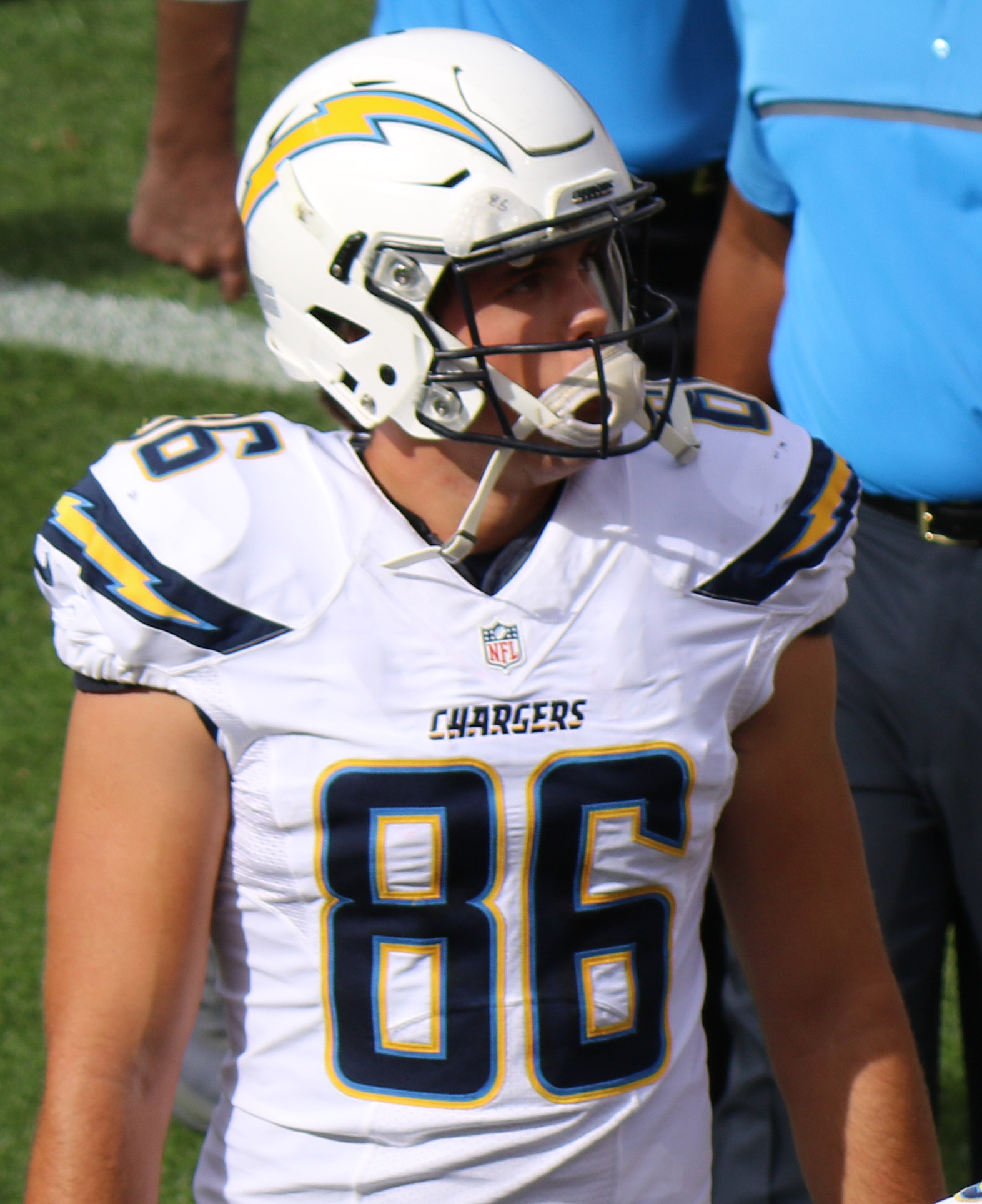




























 The Aftermath